It’s November, and I’d wager you’re starting to think about updating your content to highlight your winter offerings. The summery photos we saw of sandy, sunny days, poolside fun, and kids smothered in ice cream have been replaced with those of snowy windows, holiday sweaters, and fireside laughter. The fruity snacks on the summer menus have made way for all varieties of peppermint-flavored goodies. And content is shifting from a summer fun focus to one of cozy togetherness.
Indeed, updating your content for seasonal relevance is key to aligning your business with the experiential needs of the visitor audience and creating a special connection that will help drive new customers through your door. This means we need to think about our customer’s experience and maybe do a bit of soul-searching. To get you started, take a look at these four creative tips to guide your seasonal content updates:
1. Think about what seasonal experience you’ll create for your customers
Aligning your content with an experiential promise to your customers will help you produce content that appeals to their needs and positions you and your team as the solution. What kind of experience are your customers looking for? In what ways are they unique to the upcoming season? How can your business address this? And how will you show that in your content?
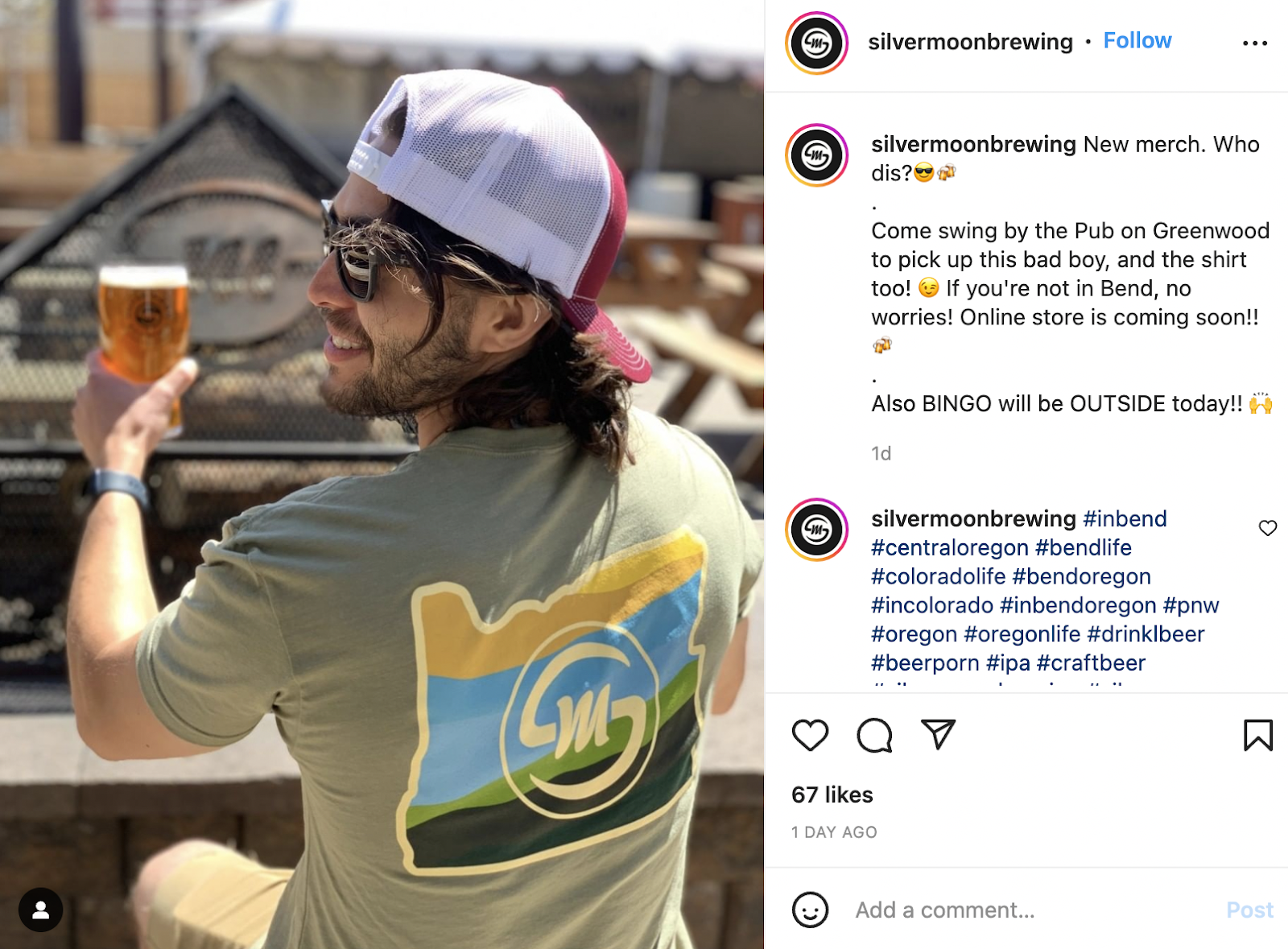
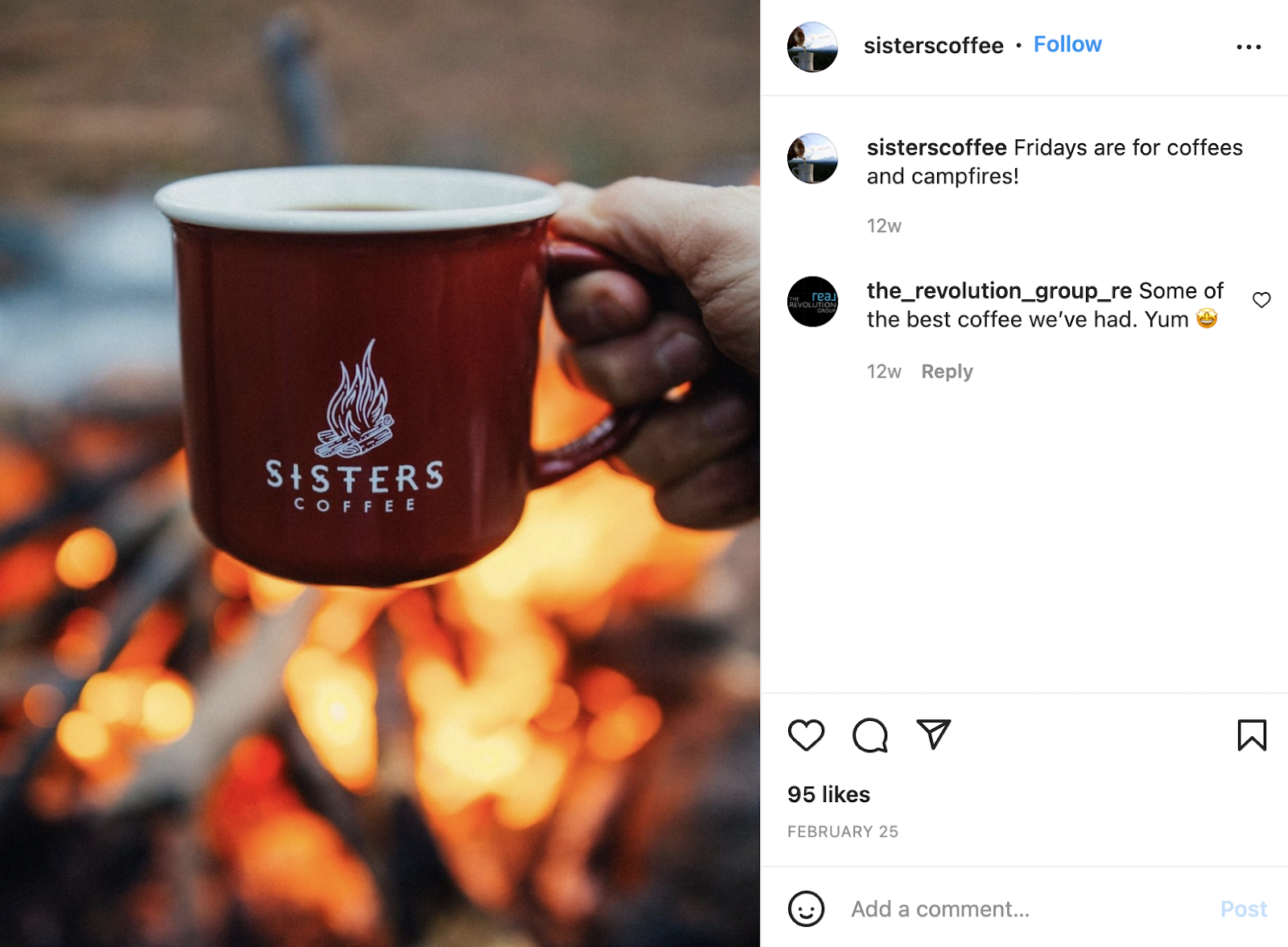
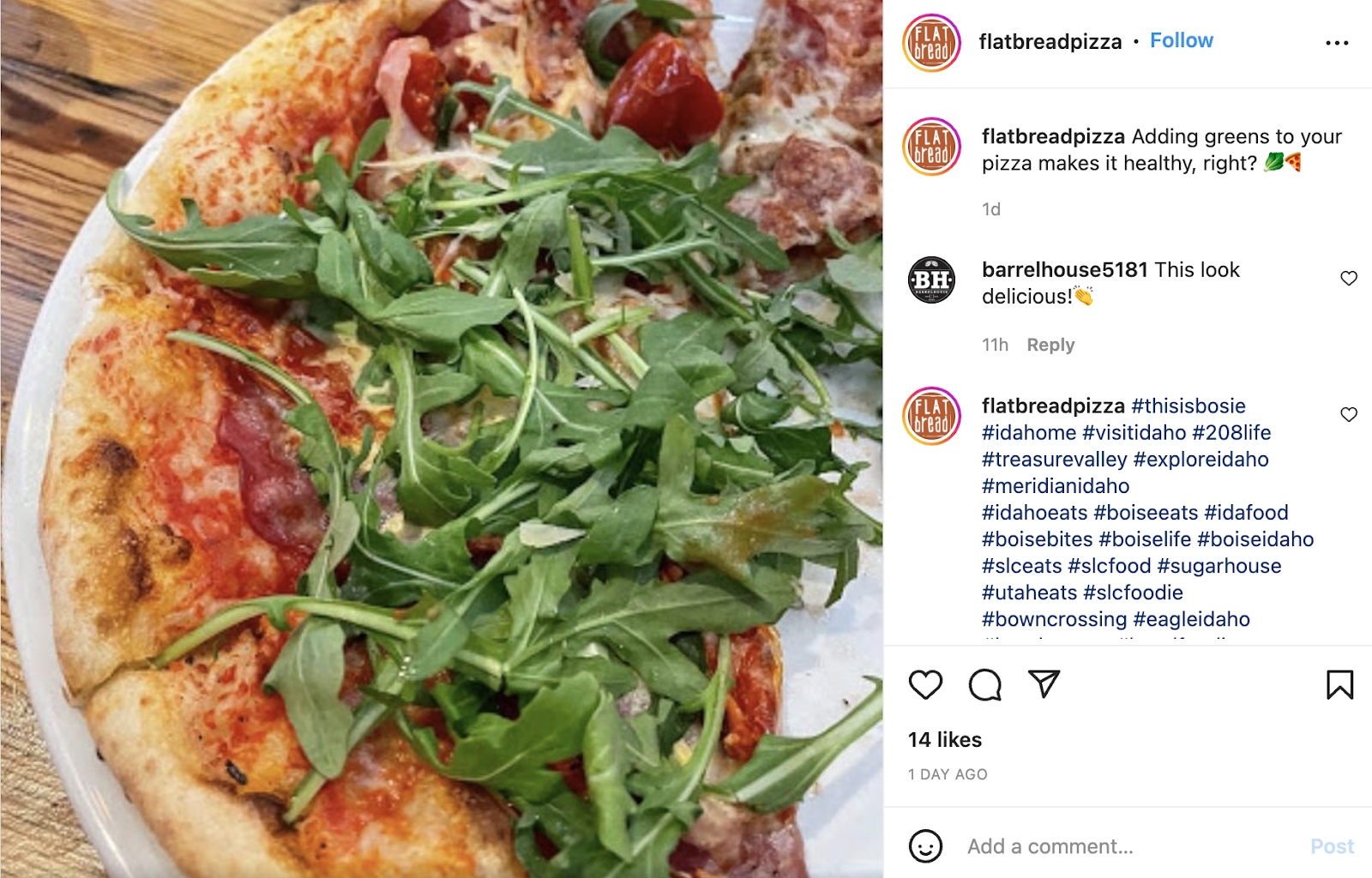
This could be as simple as taking some phone photos of customers already having a genuinely delightful experience near your patio fire, your shop aglow in wintery decor, or something else your visitors will want to experience themselves. Don’t forget about the natural elements (like snow on the window sills) that communicate charm and ambiance and evoke some pretty positive emotions. https://www.instagram.com/p/ClgzB9JLpj0/embed/captioned/?cr=1&v=14&wp=1080&rd=https%3A%2F%2Fwww.destinationtravelnetwork.com&rp=%2Fblog%2Fadvertiser-insights%2Fpost%2Fconnecting-with-winter-visitors-with-experience-focused-content%2F#%7B%22ci%22%3A0%2C%22os%22%3A941.5999999940395%2C%22ls%22%3A594.5999999940395%2C%22le%22%3A927.0999999940395%7D
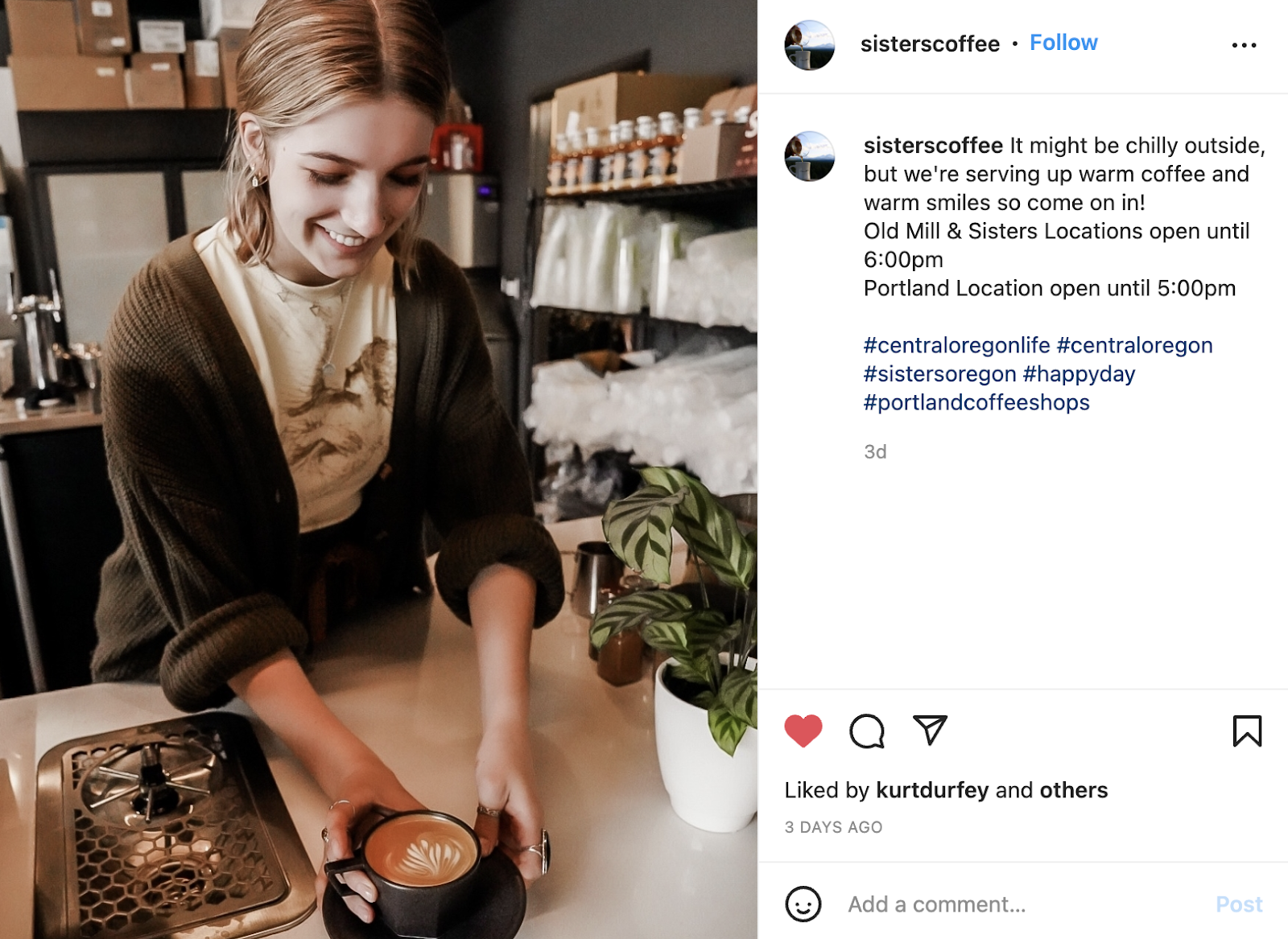
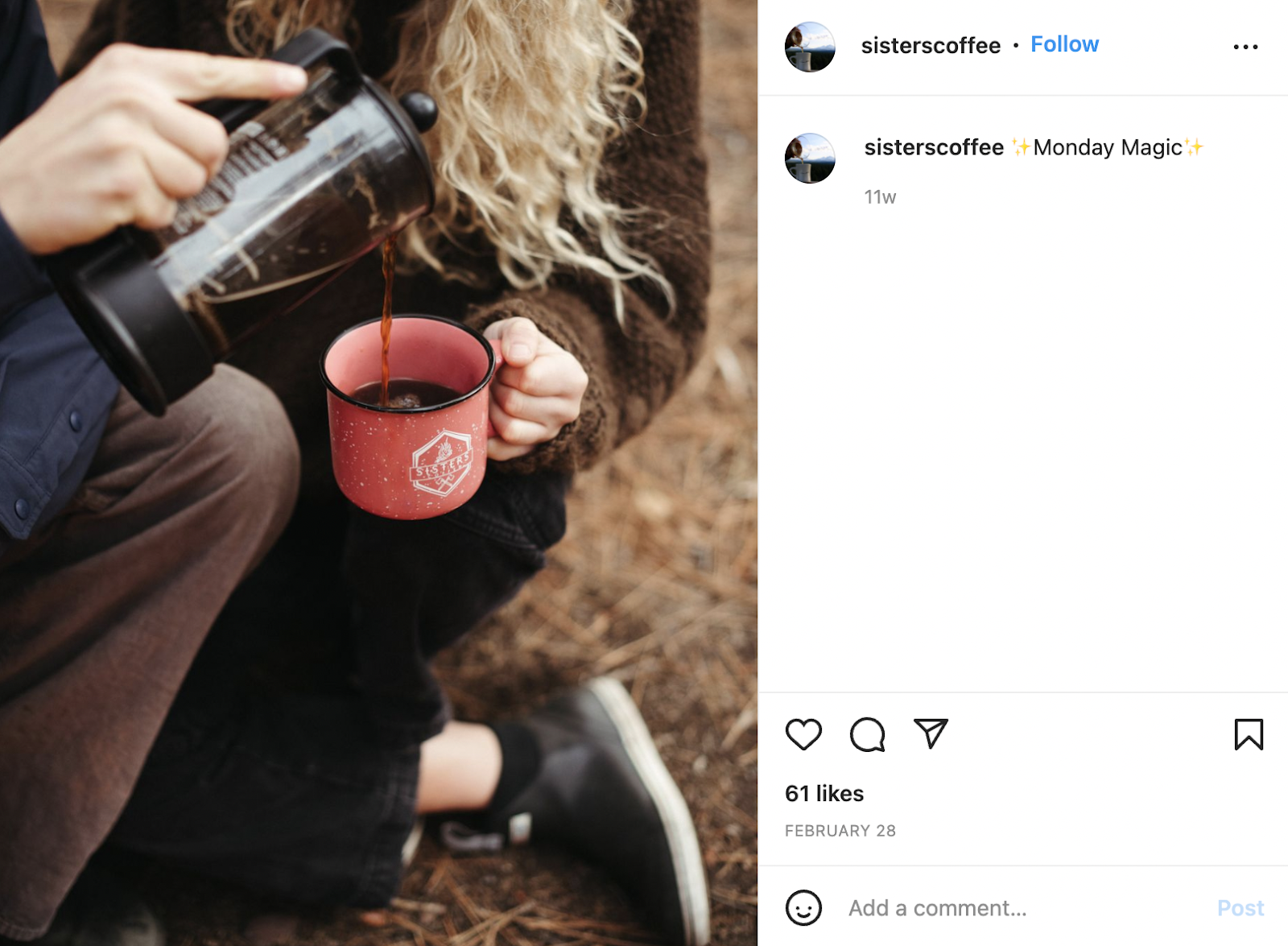
Similarly, while your summer marketing may have highlighted ways to cool down, winter customers are looking for ways to stay warm and be together. Update your ad copy to embrace these needs, highlighting how your business can help provide “warm and cozy” or other words celebrating whatever your experiential promise to the visitor is.https://www.instagram.com/p/CJHQ2t0Af3z/embed/captioned/?cr=1&v=14&wp=1080&rd=https%3A%2F%2Fwww.destinationtravelnetwork.com&rp=%2Fblog%2Fadvertiser-insights%2Fpost%2Fconnecting-with-winter-visitors-with-experience-focused-content%2F#%7B%22ci%22%3A1%2C%22os%22%3A943.7999999821186%2C%22ls%22%3A594.5999999940395%2C%22le%22%3A927.0999999940395%7D
2. Consider the timing of delivery to your different audiences
Remember that your visitor audience is looking for inspiration about your destination — on your CVB or chamber partner’s site, for example — several months in advance. But your in-market visitor audience and your (ever so important) local customers are searching for you in the moment. And usually on their phones.
How does this impact your content planning? Your social media and website content should almost certainly run with the seasonal changes: your online menu and events calendar should be up-to-date, and photography and posts should highlight things happening with your business right now.
Marketing efforts targeting your visitor audience might start running seasonal creative a bit earlier, so they land in front of your visitor audience when they’re looking for inspiration for their trip (which is a few months from now). Check your listing with your DMO partner to make sure it’s highlighting seasonal benefits and photography a bit in front of the season change. And think ahead of time for seasonal publications that will take some time to produce — a winter quarterly magazine will be picked up by visitors in the winter (even if you sent ad copy to them mid-summer).
3. Follow cues from your customer
Positive reviews on Google and Yelp can provide incredible insight into what your customers like about your business and how those things differ from season to season. Look for ways to fold these insights into your own content.
#Reposting — let your advocates work for you! Many, many of your customers are expert phone photographers and would actually LOVE to see their photos shared on Facebook by one of their favorite local businesses. Especially if they’ve tagged your business on a post — that’s your invitation to engage big time and repost if it aligns with your content strategy.
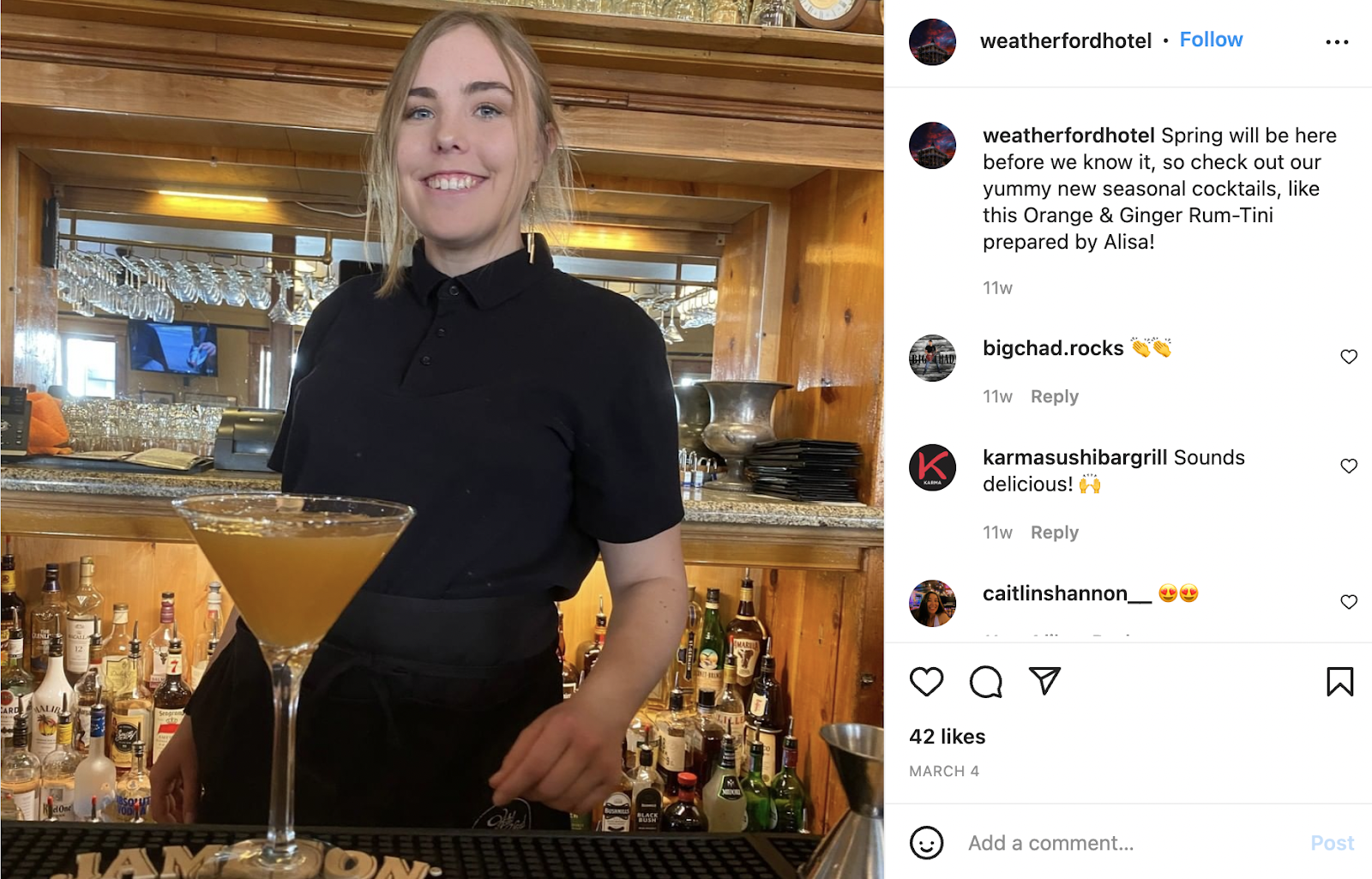
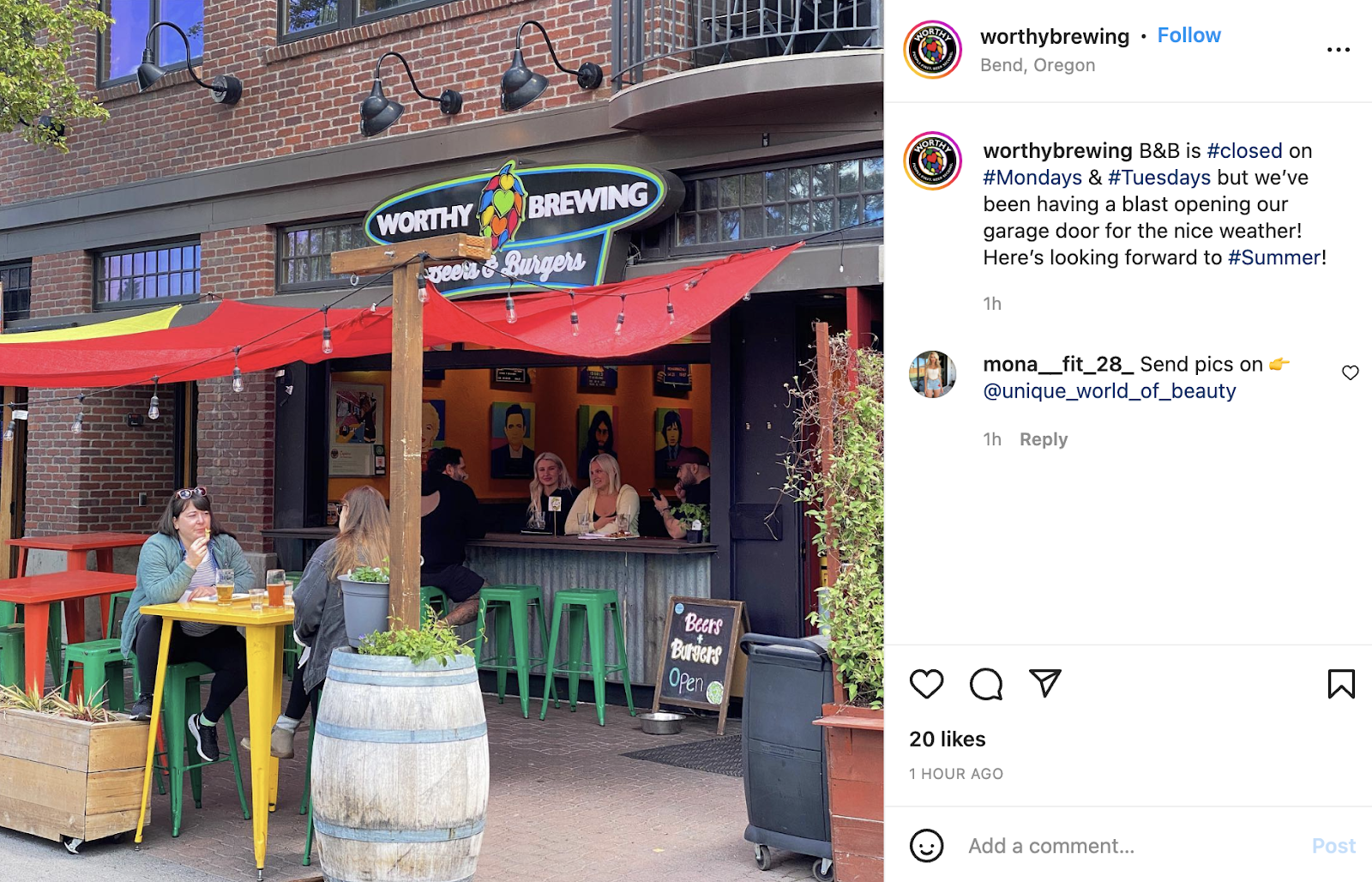
Don’t be afraid to ask for permission to use a really great image that somebody else posted to social media in your own marketing. Remember that the fact that an image is on the web does not mean we can use it freely. It’s a good idea to ask one of your fans if you can use their image before you grab it, and maybe offer some trade credit for compensation. I’d wager they’d be pretty stoked about it.https://www.instagram.com/p/4qSRuxurgA/embed/captioned/?cr=1&v=14&wp=1080&rd=https%3A%2F%2Fwww.destinationtravelnetwork.com&rp=%2Fblog%2Fadvertiser-insights%2Fpost%2Fconnecting-with-winter-visitors-with-experience-focused-content%2F#%7B%22ci%22%3A2%2C%22os%22%3A944.5%2C%22ls%22%3A594.5999999940395%2C%22le%22%3A927.0999999940395%7D
4. Remember you’ll be doing this again come spring
Yeah, this is a very cyclical thing. If you haven’t already, start stocking up on seasonal photography. And hold onto your new content to maybe pick up, tweak a bit, and reuse when you’re planning next year’s fall and winter content. Also, pay attention to how well (or not) this content performs on social media to glean extra insights about what kind of content your customers like, and then apply those insights to your content strategy.
If you’re a DTN Paid Content customer, remember that creative updates to your content are free and help to create a more meaningful onsite experience for the visitor (and higher engagement with your content). We can schedule these changes well in advance if you’d like. Email the DTN Support Team at Support@DTNads.com for details.
If you’re tuned into how your customer’s needs change from season to season and if you’ve mastered the art of phone photography, curating a library of seasonal content is a cinch. And you’re well on your way to publishing meaningful, relevant content that will resonate with your customers and have a real impact on your bottom line.
One of the biggest benefits of digital content is the ability to be agile with our messaging: in times of flux, businesses can quickly shift their messaging to better align with changing customer needs.
This is especially true as we brace for the expected resurgence of visitors following COVID-19 vaccinations later this summer and visitors once again turn their attention to researching the things to do and places to eat and stay in your market. This information, of course, will be delivered to the visitor via web pages, blog posts, customer review sites, and — maybe most notably — via the business listing on the website of your destination marketing organization.
Before we reach this point, it’s important that businesses review and re-craft (if needed) their listing content to ensure information provided about our businesses accurately answers questions, inspires people to visit, and entices them to take the next step.
RETIRE COVID-RELATED MESSAGING
Admittedly, visitor concerns about safety and cleanliness are going to linger for some time even after the population is mostly vaccinated. And we certainly have an obligation to make sure our customers are informed about the risks and requirements associated with COVID-19.
But, while that information may still be relevant, it’s not going to be a primary concern for the customer after the pandemic. Meaning, the content that you (maybe very recently) updated to highlight special delivery options, curbside pick-up, restrictions in party-size, etc., in response to COVID-19 will quickly become a secondary consideration and, eventually, it may no longer be relevant. We’ll need to start shifting our content away from COVID-related details and towards highlighting how we’re meeting the trip-planning and inspiration needs of the visitor.
HIGHLIGHT YOUR VALUE PROPOSITION – AND GET EMOTIONAL
In your updated listing content, be sure to highlight the specific ways in which your business will provide value to the visitor during their trip. If you can find a way to tap into an emotional need, it is far more likely that your message will resonate with the prospect.
For example, an attraction might highlight “great family memories” and “easy online ticket purchasing,” highlighting two important benefits for families; their love for their family and ease of planning. Similarly, a restaurant might appeal to a customer’s desire to experience local flavors by highlighting its “21 local beers on tap” and a menu composed of locally-sourced ingredients.
In many ways, highlighting these specific value points is more important than details about your business. The visitor, afterall, isn’t likely going to the market to look for your business, specifically. They’re looking for “a relaxing and rejuvenating spa experience.” It’s our job to position our businesses as the solution for these needs.
REMEMBER YOUR OTHER CHANNELS FOR IN-MARKET VISITORS AND LOCALS
Note that these same guidelines should apply to your listings across your web footprint, including Google, Facebook, Foursquare, Yelp and others. These platforms are not only being used by visitors (often while they’re in the market) but by your local prospects as well. For these channels, it’d be prudent to think about how your value proposition addresses the needs of each of these audience segments and to craft your content to meet the needs of the larger audience.
CONFIRM THAT YOUR OPERATIONAL DETAILS ARE UP-TO-DATE
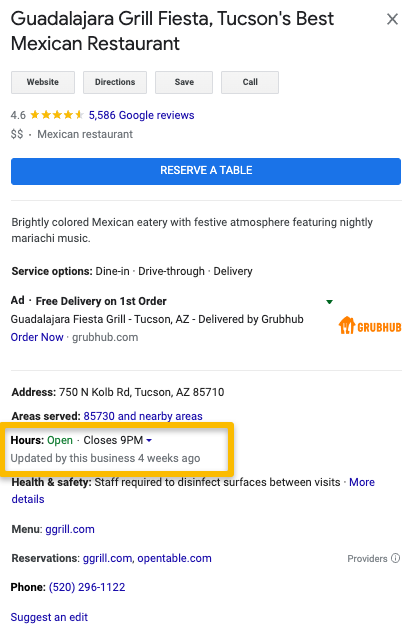
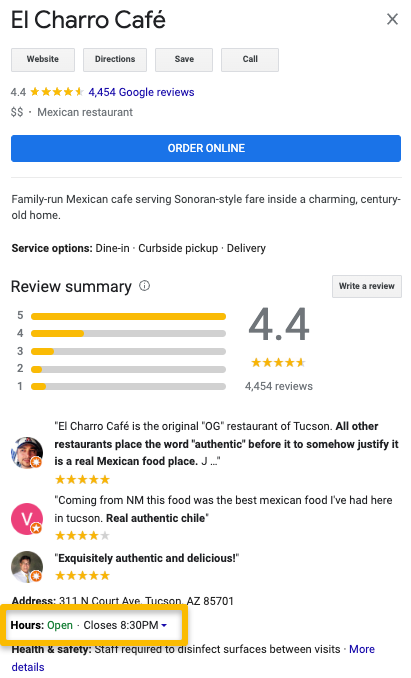
Nothing will aggravate a customer more quickly than visiting your business after looking up your hours on Google only to discover (ugh!) you’re actually closed! Unfortunately, as our business hours and other operational details have been pretty fluid over the last year in light of circumstances surrounding COVID-19, it’s likely that your information is inaccurate on at least one of these platforms. For the sake of the customer, take the time to check each of these websites and bring your details up to speed.
GREAT PHOTOGRAPHY IS CRITICAL
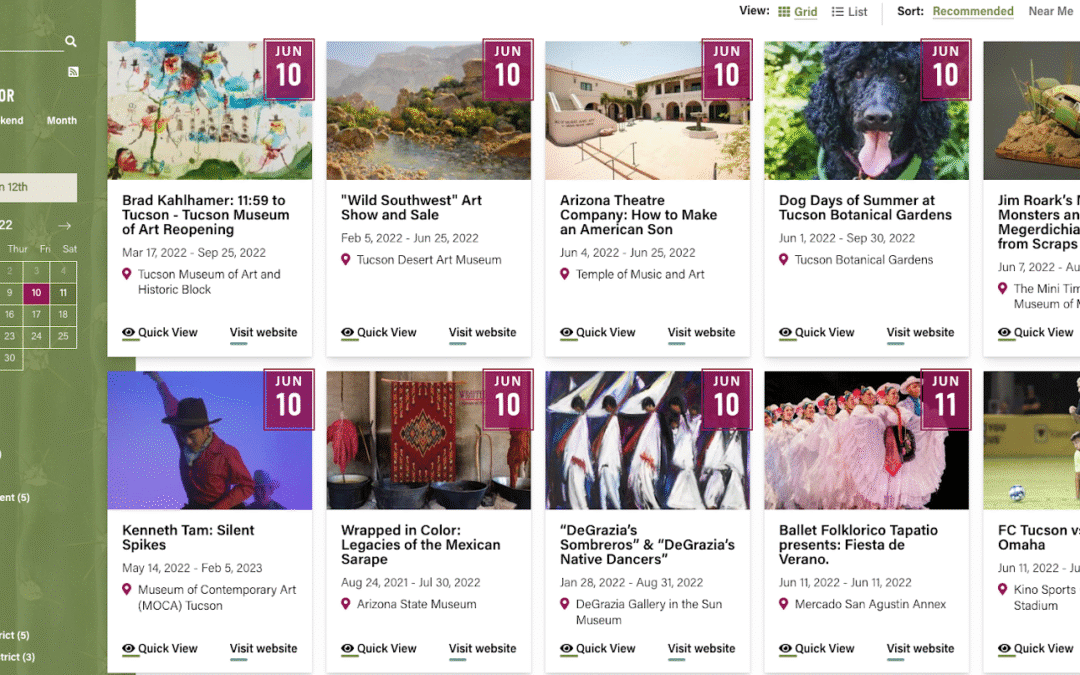
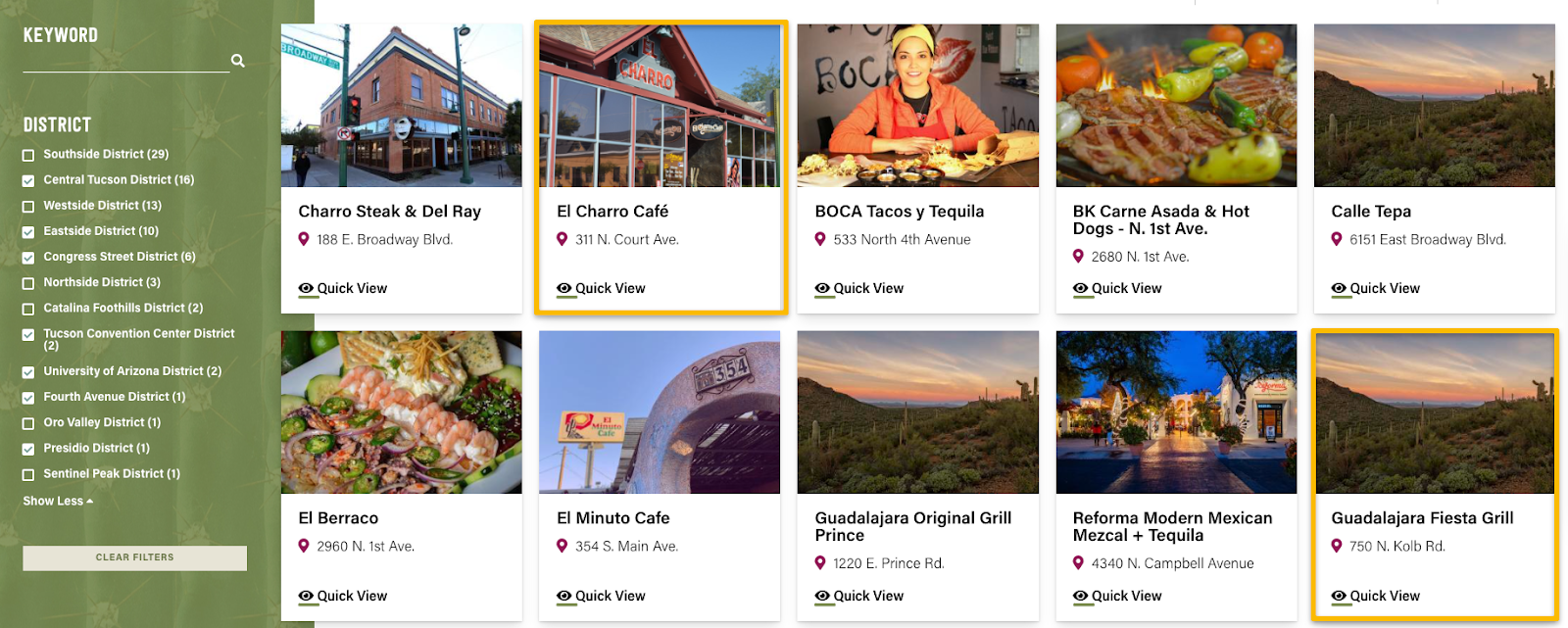
Remember that visitors are scanning through the listings pretty quickly. Many of these listings pages show listings in a grid format and highlight a photo and a business name. This means you literally have a fraction of a second to grab the visitor’s attention while they’re scrolling through the listings. And you need to do this using, primarily, an image.
To do this, it’s important to think about what kind of content the visitor wants to see and to curate your visual story (via photographs) accordingly. Because visitors are looking on destination websites largely for inspiration, your photography should absolutely highlight an experience the visitor can get excited about.
DON’T WORRY ABOUT INCLUDING YOUR LOGO
“But,” you might say, “I need my logo on my listing.” The reality is that, unless your business is a huge attraction in the market with a ton of brand equity, your logo is probably not going to have a huge impact on the visitor’s decision to take the next step. What is important is that the visitor can quickly find solutions that will aid in trip inspiration and planning or that the customer can quickly find while she’s in the market. And, if the content you provide marries well with their needs, there’s a good chance you’ll have a new customer.
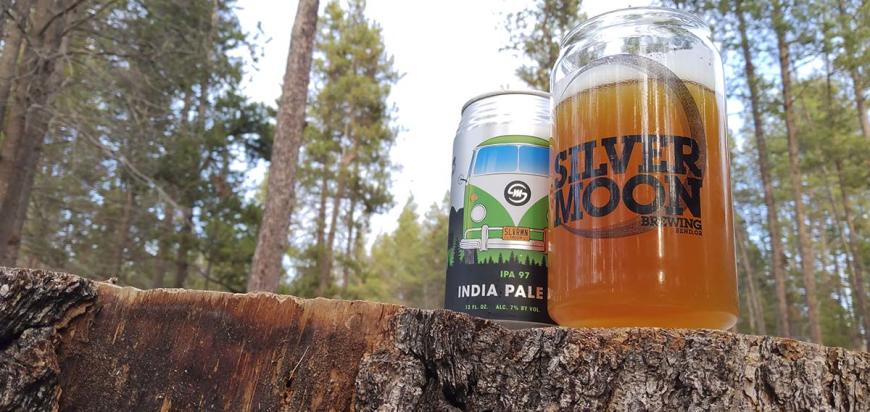
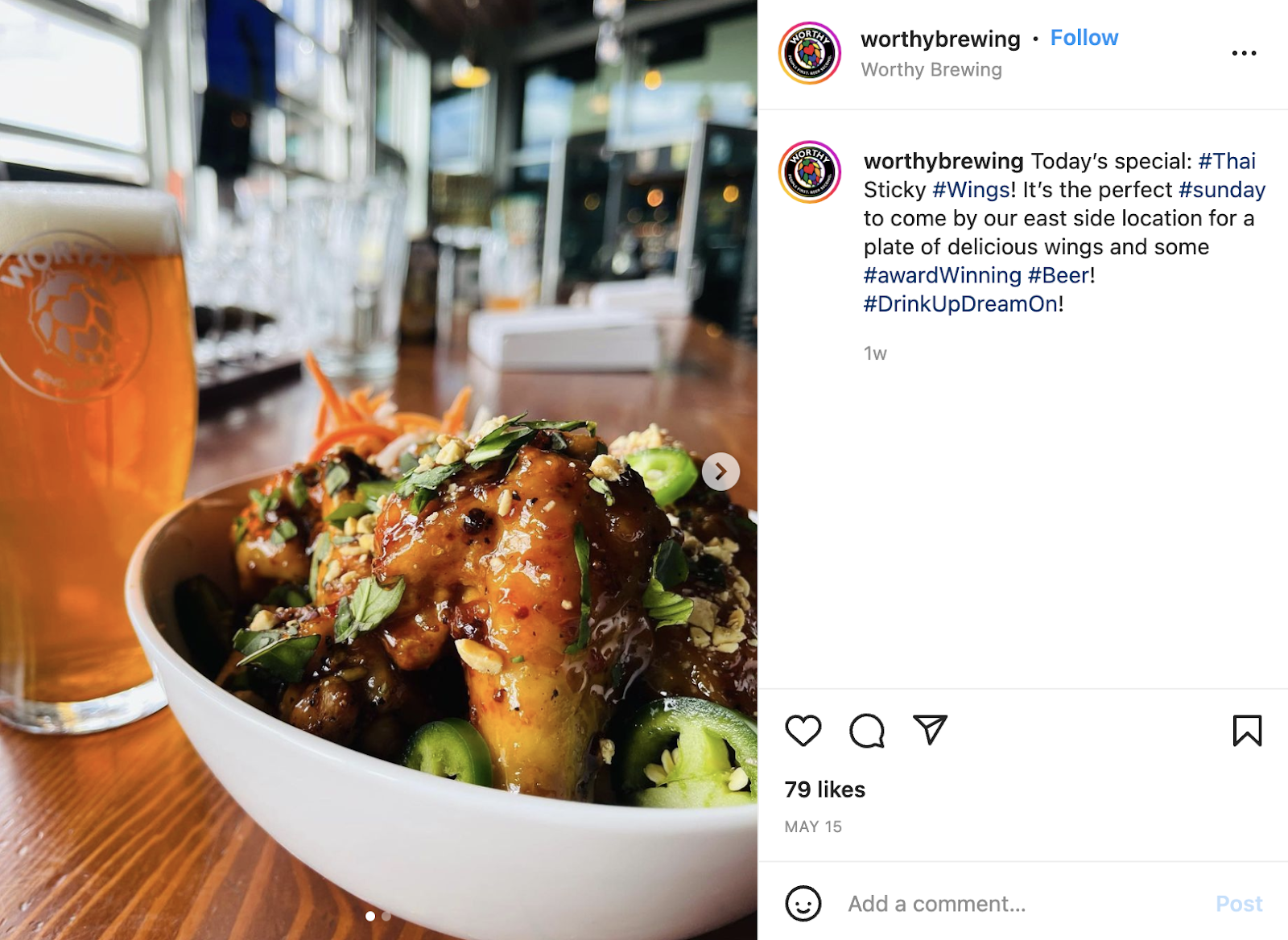
To this end, your listings content (including your photography) should be 100% about engaging the audience. If you absolutely must include your logo, try to find a way to include it in the photo organically. A restaurant or brewery, for example, can use a glass with its logo on it in lieu of superimposing your logo over a photo.
INCREASE YOUR LISTING’S EXPOSURE ON YOUR DMO PARTNERS WEBSITE
If your DMO partner is also a DTN partner, you likely have the option to dramatically increase your listing exposure on the DMO’s site. For most of these sites, the listings populate alphanumerically on the category page. The DTN Featured Listing pushes it to the top of the first page of listings results, giving your listing front-and-center attention and tons more views and clicks. To see if you’re eligible for a Featured Listing on your DMO partner’s website, connect with your DMO partner or the DTN Team.
One of my favorite positive outcomes of the economic collapse in the wake of the COVID-19 pandemic was the booming level of support for local businesses. “Shop local” was already a hot topic before COVID hit. Our communities were increasingly supporting locally-owned and locally-grown businesses. And small businesses were getting better at marketing themselves as “local” and perpetuating a vigorous grassroots campaign that was roundly supported by local chambers and CVBs.
But never, never have I seen “shop local” come to such a high point as it did in the spring of 2020 when COVID brought consumer spending to a screeching halt. Shop local advocates immediately sprang to work advocating to keep local business “alive” and awakened a level of zeal in the movement that was absolutely unprecedented.
One thing’s for sure: the shop local movement is more robust than ever and that title — “local business” — has a lot more equity in the post-COVID landscape. And, as we come out of this thing and we all begin to slink back into some of our pre-pandemic routines, frankly, I think this is ours to lose.
To keep this alive, local businesses are going to need to step it up:
Highlight your shop local campaigns in your businesses, on your website, and in your daily discourse.
“Thank you for shopping local.” Say it aloud to your customers. Print it on your menus. Embroider it into your aprons.
Also, remember that the visitors in your market have been a part of the “shop local” boom in their own neighborhoods and they are now, more than ever, looking to support local businesses when they’re traveling. And these visitors and your local customers are looking to the websites of your chambers and CVBs for information about local businesses.
Make sure listing content on the website of your chamber partner or CVB highlights the fact that you’re a locally-owned, locally-grown, locally-brewed, etc.
Identify ways to reach locals and visitors while they’re out and about in your market.
More than anything, just celebrate the fact that you’re a local business. Vocally. It’s up to our small business owners and marketers to keep this shop local movement at a high point.
Your customers are eager to shop local. You just need to help them find you.
Boy, oh boy, the pandemic has really made a mess of things for our brewery neighbors, hasn’t it? Even after tourism started to pick up again this summer, regional restaurant restrictions and mandates hindered capacity for brewpubs and taprooms, forcing craft breweries to turn their sights to off-premise retail sales. The strategy increased the variety of brews on the shelf at the store (yay!) but also created a massive supply chain shortage of aluminum cans, exacerbating the issue for many of our small brewery partners.
This holiday, there’s an easy way to help out your struggling brew business neighbor: buy their beer. For your dinner parties, office parties, stocking stuffers, white elephant gifts, random acts of kindness (I’ve often thought about dropping a sixer of a local brew trail-side on the PCT for through-hikers as a way of saying “Welcome to Central Oregon!”). Beer-themed gifts are a versatile (and appreciated) present.
And I’m not talking about your giant breweries, either — those big players that produce in your market, have national distribution, and sponsor a TON of great events (and we thank you!). In my neck of the woods, Deschutes Brewery and 10 Barrel Brewing (now an AB company) fit that category. They’re both great breweries with national distribution. If a visitor in my market asks, I’ll happily point them in their direction.
AND the soul of your destination’s microbrew community — and your distillery community, and your winery community — is really with the small players. The new guys who are just breaking into the market and finding their place. They bring an exciting level of newness and energy and experimentation to not only your visitors but to locals like you and your workmates, and they celebrate entrepreneurship and creativity in your market.
These are the Tiny Tims of the brew community this post-pandemic holiday. And helping them out is just good for the soul.
This holiday season, (obviously) shop local. But don’t forget that beer and wine and spirits from producers in your own community not only make great gifts but celebrate the flavor, spirit, and resiliency of your destination. And that’s worth supporting.
Cheers!
Footnote: At the time of writing, I was enjoying a pint of the Sippycup Hazy Pale from Bend’s own GoodLife Brewing. And it was delicious.
Last summer, we published a DTN Flight Plan series all about road-tripping, the surge of drive tourism in the wake of the pandemic. And throughout my research on the topic, I was intrigued. I’d long been looking for an alternative to the whole airport experience; parking, shuttles, security, germs, waiting, waiting, and waiting. I’m over it. I’d be a happy man if I could go the rest of my life and never set foot on a plane again.
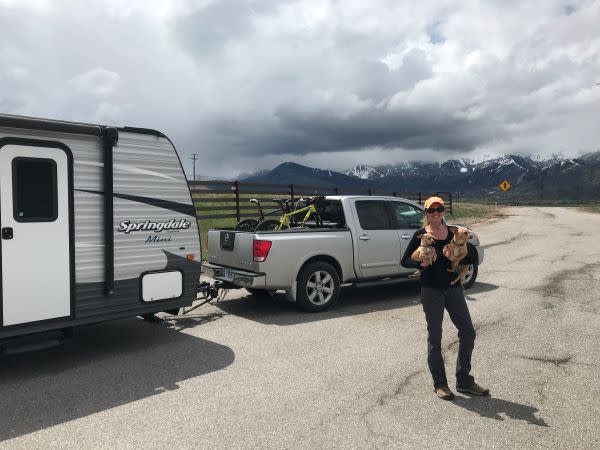
But what’s the alternative? Towing a small home behind us. Planning a seven-day road trip — a seven-day adventure? Well, that sounds … awesome. And my wife didn’t completely kibosh the idea. So when a neighbor revealed that she was selling her camper trailer, we jumped on it. We’re planning our first BIG road trip in April, from Central Oregon, down the coast to L.A. and then over to Southern Arizona for the Simpleview Summit.
But I’m brand new to this, and I honestly have no idea what’s next. I mean, what will this experience really be like? What drives road-trippers to the road? This blog series, The Spirit of the Road, chronicles our road-trip adventures down the Pacific Coast and back up through Utah and Idaho, and back to Oregon and searches for some meaning behind the move to the road.
Follow Kurtis’ road-tripping adventures on Instagram @DTNads.
Part One: Spontaneous Exploration
To kick off this adventure, I appealed to the insights of seasoned road-tripper and outdoor enthusiast Christine Livingston, assistant director of Indiana Dunes Tourism.
KURTIS: Christine, being a seasoned road-tripper, I imagine you’re relatively settled into your on-the-road life; pre-trip prep is pretty straightforward, hurdles have become somewhat predictable, maybe you have favorite routes that you know by heart. At one point, though, you were brand new to RVing, and something happened that pulled you back to the camper road-trip experience time and time again. What experience initially drove you to love road-tripping and to fold it into your lifestyle?
CHRISTINE: There was more than one aspect of camping that drew me in. I love being outdoors, exploring, and meeting new people. I recall once when we were headed to the East Coast, we discovered at the last minute that a hurricane was expected to touch down near our destination. So we stopped, checked the forecast, and headed instead toward sunnier weather. The nice thing about traveling in a camper is that we can be flexible and last-minute changes are simpler. We sometimes decide at the spur of the moment that we want to hit the road. Our camper is pretty well stocked. Just add food, beer, and we are on our way!
KURTIS: Taking notes: “add beer …” The ability to be flexible and impulsive are huge draws for me and, it seems to me, are important ingredients in any adventure. How have your RVing experiences since then bolstered your passion for this kind of tourism?
CHRISTINE: I like to slow down and really experience a place. Camping makes that possible. Plus, having a camper makes it more comfortable than tenting and less weather contingent.
We also like a wide variety of experiences. We enjoy both walkable, urban experiences with great dining as well as more remote and natural settings. We’ve found people in both scenarios are friendly and helpful. Campers look out for each other. Fellow campers have lent us tools, shared groceries and firewood, and are generally pretty cool. We’ve met interesting people from all over that we never would have encountered traveling via air — heard so many interesting stories. I walked a fellow camper’s pet iguana on a leash once. And we met a couple who had their entire camper and set up themed in red for a concert — down to the dog bowl and their jackets — pretty interesting to see. It’s just more fun!
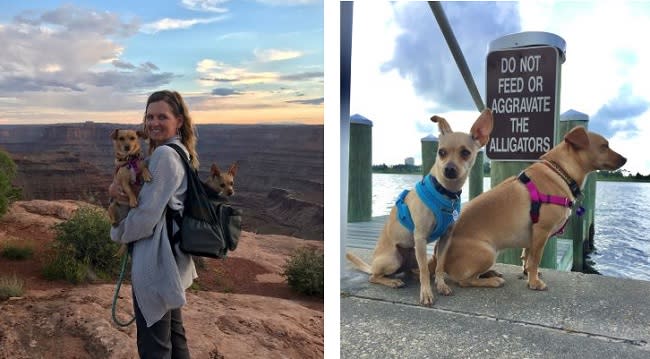
Traveling with our pets is another bonus. Our camper makes this a breeze and for a fraction of the cost of staying at traditional accommodations. A little research ahead of time to locate pet-friendly spots makes taking pets more convenient and much more fun than boarding. My dogs have traveled so much that they know the drill. Dining and attending outdoor events with them is easy now.
KURTIS: I’ve just started researching campgrounds en route from Central Oregon down the coast and then over to Tucson. But I think I’m more drawn to the notion of wilderness boondocking or staying off-grid on public land somewhere, especially in the woods. I imagine boondocking melds well with your affinity for more secluded and quiet locations and to get you (and the dogs) outdoors. Do you camp off-grid often?
CHRISTINE: Wilderness boondocking has big appeal. My daughter works for the Forest Service in California, knows the spots to go, and does this in her Subaru. It inspired me.
I’m not hardcore enough to go with no amenities for long, though. Our camper is compact with small tanks, the battery doesn’t last long, and no solar power — yet 🙂 More boondocking for us once we upgrade. Boondocking makes it even easier to be flexible because you don’t need reservations. I’m sure you guys will find some cool spots on that route!
“People want to visit America in a more meaningful way.” — Christine Livingston, Assistant Director, Indiana Dunes Tourism
KURTIS: What about the more urban experiences? We’re really drawn to stops at some of the smaller beach towns down the coast; public beaches, nearby state parks, and adorable downtown and city areas that celebrate local restaurants, coffee shops and (to your earlier point) breweries. In this way, I guess RV road-tripping is pretty Americana. Right?
CHRISTINE: Based on my conversations with road trippers here in the Indiana Dunes and during my own trips, I think people want to visit America in a more meaningful way. I spent many years traveling to interesting destinations for industry events or work-related training but had to fly in and out so quickly that I never really saw the places. Driving cross country, on the other hand, we stop at what interests us spontaneously, stay as long as we want, then roll along to the next spot. What a contrast and so much more fun!
Other road trippers I’ve talked to also love spontaneous exploration. Just since I started road-tripping, several friends have been inspired to get/rent their own campers and try road-tripping for the first time. I believe the trend will continue to grow.
KURTIS: Knowing that I’m new to this, what have you learned in your experiences that you maybe wish you’d known when you first started road-tripping?
CHRISTINE: Most Walmarts will let you camp for free in their parking lots. We learned this after we had been road-tripping for a while. It can be a great plan B in case campgrounds are all full. We have done it a couple of times in a pinch.
Another important thing I’ve learned is to allow time to stop. We used to drive 10-12 hours a day. Now we stick to driving 6-8 hours per day so we can stop and aren’t pressed to stay on schedule. This transformed our trips. My dad and I traveled to California and happened to find that the salt flats in Utah had about a foot of water covering them. There was this layer of water covering the flats as far as the eye could see. It was ethereal. How could we not slow down and spend time taking this in!? Since we had planned for spontaneous adventures, we weren’t pressured to get back on the road. Sometimes those unplanned stops are the most memorable.
5 social listening tips to help find out what your customers love (or don’t) about you.
Do you know what your customers like about your business? Or, maybe a better question: do you know what they don’t like? “Of course,” you might say, “I talk to my customers, y’know.” Yeah, it’s great that you’re chatting with your customers when they’re in your business. But what are they saying behind your back? To complete strangers? To visitors in your market and prospective customers?
The practice of “social listening” — rummaging through social media and customer review posts about your business to glean insight about what the customer is saying about you — is a quick and easy way to better understand your customer’s sentiment via unsolicited, candid feedback about your product, your service, and whether or not they think visitors (who are absolutely reading these reviews) should give you a try.
Social listening can reveal fantastic new insights about operational and marketing considerations you’re already thinking about every day and produce real change that will help improve your business and benefit your bottom line. But where to start?
Check out our five social listening tips to help find out what your customers love (or don’t) about you and then spend a few minutes every day catching up on customer feedback posted across the web. Within a day or two, I’d wager you’ll have uncovered new insights about the needs of your customers that will help improve your customer’s experience and willingness to recommend.
1. Stop Talking For A Minute And Just Listen
First, let’s get into some serious listening mode. This is an exercise in discovery. So we’re just gathering information right now. For our purposes, I’m going to look at these as though I’m a visitor in my market: on my phone. And I’ll start with a look at one of my favorite Central Oregon breweries, Sunriver Brewing.
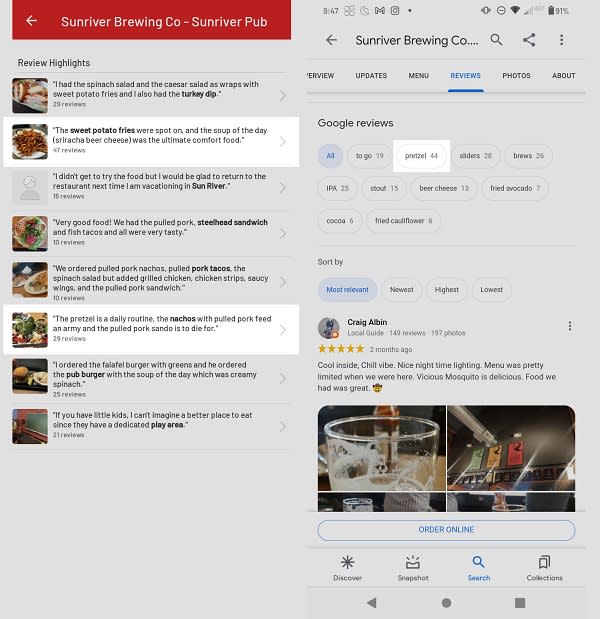
Initially, I’m looking for some high-level information about what customers are saying. Both Yelp! (on the left) and Google (right) summarize recurring keywords from reviewer feedback, making it easy to glean insights about what your customers like best about you. In this case, pretzels, nachos, and sweet potato fries float to the top as fan favorites with 120 mentions in reviews, collectively. The cheese and the mustard sauce that complement this calorie fest are made with beer from the brewery, making it a unique, buzz-worthy, you-gotta-try-it experience for customers.
Then we can start to drill a bit deeper with a cursory run-through of the reviews on the main business page. Some of these are pretty dense, and I wouldn’t concern myself too much about reading every single one entirely. (I doubt that’s what visitors in the market are doing.)
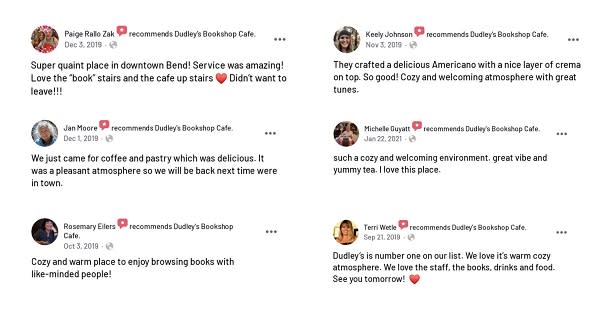
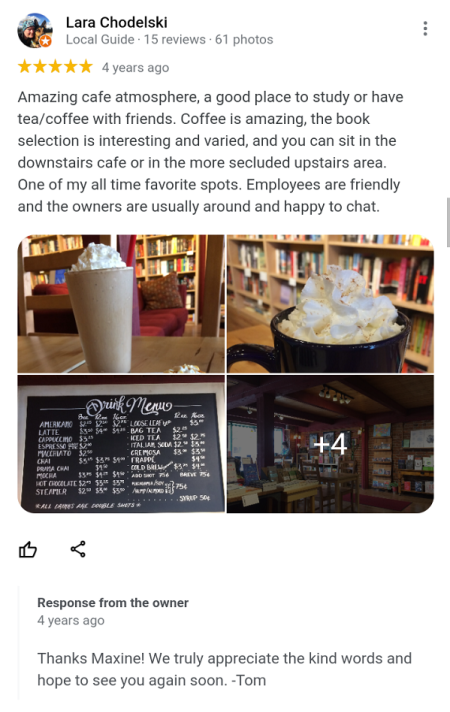
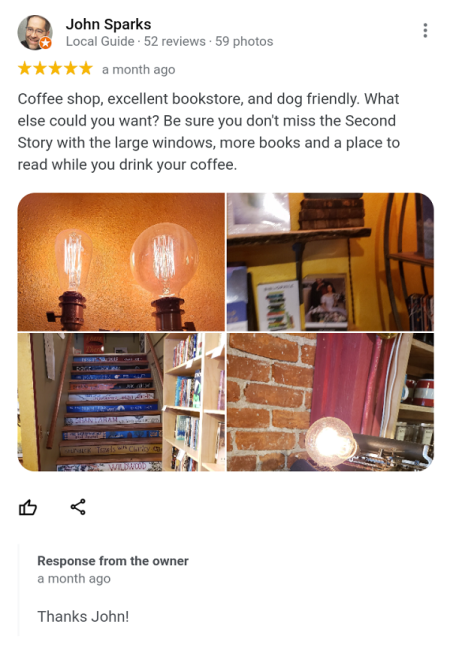
But read through the short versions of the posts and keep an eye out for common themes. Topics like customer service, quality of the product, wait time, cleanliness, and atmosphere are some of the usual suspects. Reviews for Dudley’s Bookshop Cafe in downtown Bend, for example, consistently use great experiential adjectives like “quaint,” “cozy,” and “welcoming”:
Dudley’s has a library-esque upstairs room with large windows for lots of natural light and tons of couch space where customers can hang out for hours on end. In this situation, the customer is volunteering that, while the book selection, coffee, and (sometimes) prices are important, the relaxing store experience is a primary driver for return visits and recommendations.
2. Exploit Your Strengths
Now that we know about a few things really important to these customers, we can infer that because they make existing customers happy, they’re also likely very important to prospective customers, including visitors in the market. And the business can now look for ways to fold these insights into their operations and marketing strategies.
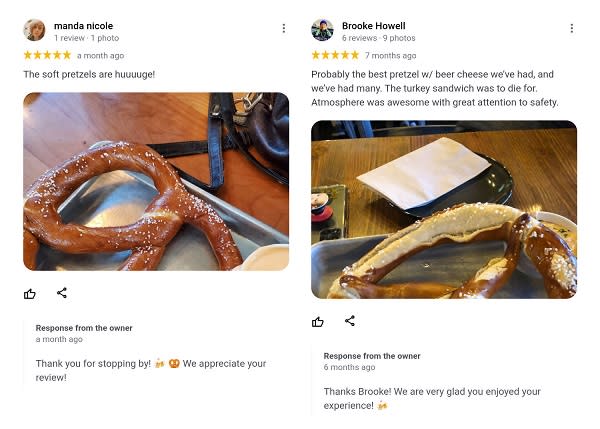
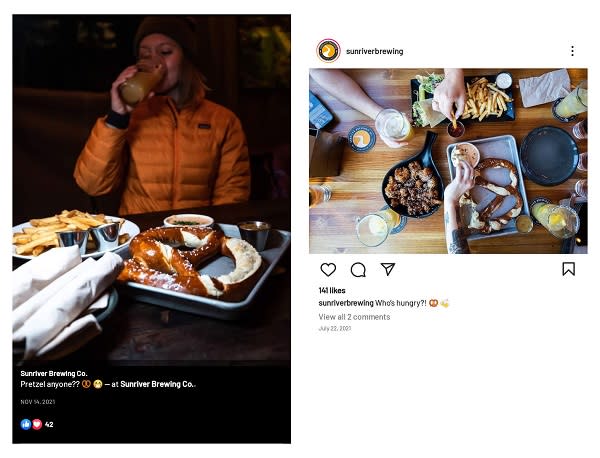
For example, if Sunriver Brewing is looking for a quick idea for a social media post that would get likes and shares, their delicious pretzel is a good candidate. In fact, judging from the reviews, photos of any of these appetizers would be great for high-performing social media fodder.
Likewise, it’s clear that a part of what Dudley’s delivers to its customers is a quiet, cozy, and friendly space. And we can guess that this is exactly how locals and visitors talk about Dudley’s to one another in casual conversation. To this end, Dudley’s should incorporate (and has) language highlighting their quiet and comfy atmosphere in their listings across the internet, on the Visit Bend website, and in its marketing copy across the board to align the business with this customer need.
3. Own the Negative
But what if customer reviews are not so glowing? In some ways, negative reviews are more valuable to you than any positive review because, for one, this is likely feedback that you’re not getting from your customers in person. And second, while super positive reviews help affirm that you’re doing everything well, negative reviews present an opportunity to improve, even in small ways, which can positively impact your bottom line.
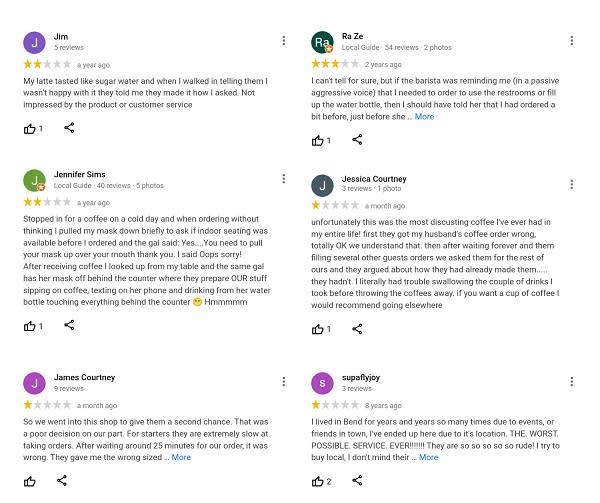
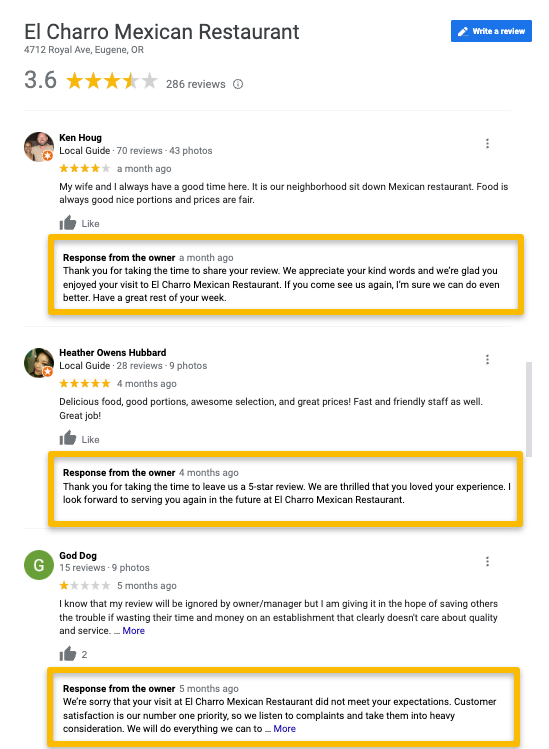
Bellatazza Coffee, one of my favorite spots downtown, has rave customer reviews. And, when we take a closer look at these comments, we see some concerning remarks about quality and service.
Admittedly, Bellatazza has many very positive reviews, and these appear to be the exception to the rule. But these customers are being very candid about their negative experiences, and it’s logical to think that these are not isolated instances. With (at least) three other coffee shops within a few hundred feet of Bellatazza where the customer can go instead, this is an issue.
It’s super easy to write off negative reviews with a “well, you can’t win ‘em all” or “they’re just not my customer” kind of mentality. Or to set these aside as small financial losses: “Oh great, I’m losing a whole $30 in revenue.” But this is super short-sighted. The reality is these were your customers. And, not to put too fine a point on it, your team blew it. In fact, not only were these paying customers who would possibly have come back, but it was also an opportunity to have another fan who would willingly refer you to their friends. Instead, their candid comments in a public forum are likely hindering new business to some extent.
We need to recognize that there’s possibly an issue here. And an opportunity for Bellatazza management to see these comments, investigate, and implement additional training to their team members to elevate the level of service and quality.
4. And Now Reply
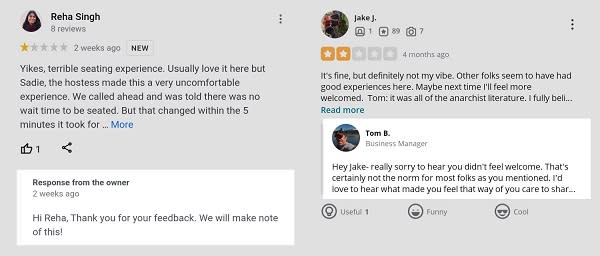
The most unfortunate part of the Bellatazza example is that (for many of these reviews, anyway) nobody addressed the issue with the customer. The worst thing you can do with negative reviews is nothing. In contrast, both Sunriver Brewing and Dudley’s have responded to negative remarks in positive and diplomatic ways to let the customer know that they’ve heard the concern and to help neutralize the situation.
Respond to negative reviews and be gracious and sincere. This will go a long way in earning points back with not only the person who had the negative experience but with every person who reads the review.
5. Engage With Your Fans
THIS is the easy part, reply to the positive reviews. These customers are likely to come back, and a special note will help encourage that return visit. We’re not writing greeting cards here. A simple “thank you” and “I’m glad you liked it!” and “see you next time!” is totally fine.
Remember that social listening is not about promotion. It’s about coming to a better understanding of how people are talking about your business, to change the way that you operate and market your business to align more closely with the customer’s needs, and to create more happy fans and more happy referrals.
And it’s easy to get in front of it! Just takes a few minutes a day.
These days, taking pictures on our phones is as much a part of our day-to-day as eating. We’re constantly snapping photos of our lives, our kids, and our food and sharing it with the world. This is especially true when we’re traveling.
For tourism businesses, this is a great opportunity to take cues from our visitor phone photographers about the kinds of images that inspire them, to re-tool our own images to align more closely with visitors’ lifestyle and interests, and to help create closer connections between you and your customers and advocates — especially as we start gearing up for the summer travel season.
But how do you do it? Let’s not overthink this. You’re likely already at least a novice phone photographer. Embrace these skills and use your phone to take more photos that you can use across your marketing pieces at virtually no extra cost to your business. And take a look at these phone photography tips to help snap genuine, relatable images that will help you connect with your customers.
Highlight a “Real People” Experience
Keeping in mind that your visitor customers are looking for ideas and inspiration in their trip planning, focus on a subject doing something in your business or with your product that the audience can get excited about. This means abandoning some of the old rules. For example, lose the carefully staged product shots. Those are great for a product listing in your online store. But, for visitors looking for an experience, a photo of a pot on a shelf is a big miss.
Instead, think about the experiential promise you’re committing to visitors and the experience they can expect to find in your store. Is it friendly? Tasty? Relaxing? Exciting? Full of discovery? And how are these experiences highlighted in your phone photography?
If you need to include a product or your logo in the shot, include it organically:
Add a Smiling Team Member
Including a team member in your phone photography provides additional context about your staff, your company values, and the person-to-person experience the customer can expect in your business. These details matter in visitors’ planning.
This is an easy update to the old product shot format. When your barista has finished that perfect cappuccino art, keep her in the shot. These photos highlight not only the drinks but quality of service and ambiance — two important experiential elements:
Show Engagement with Your Product or Service
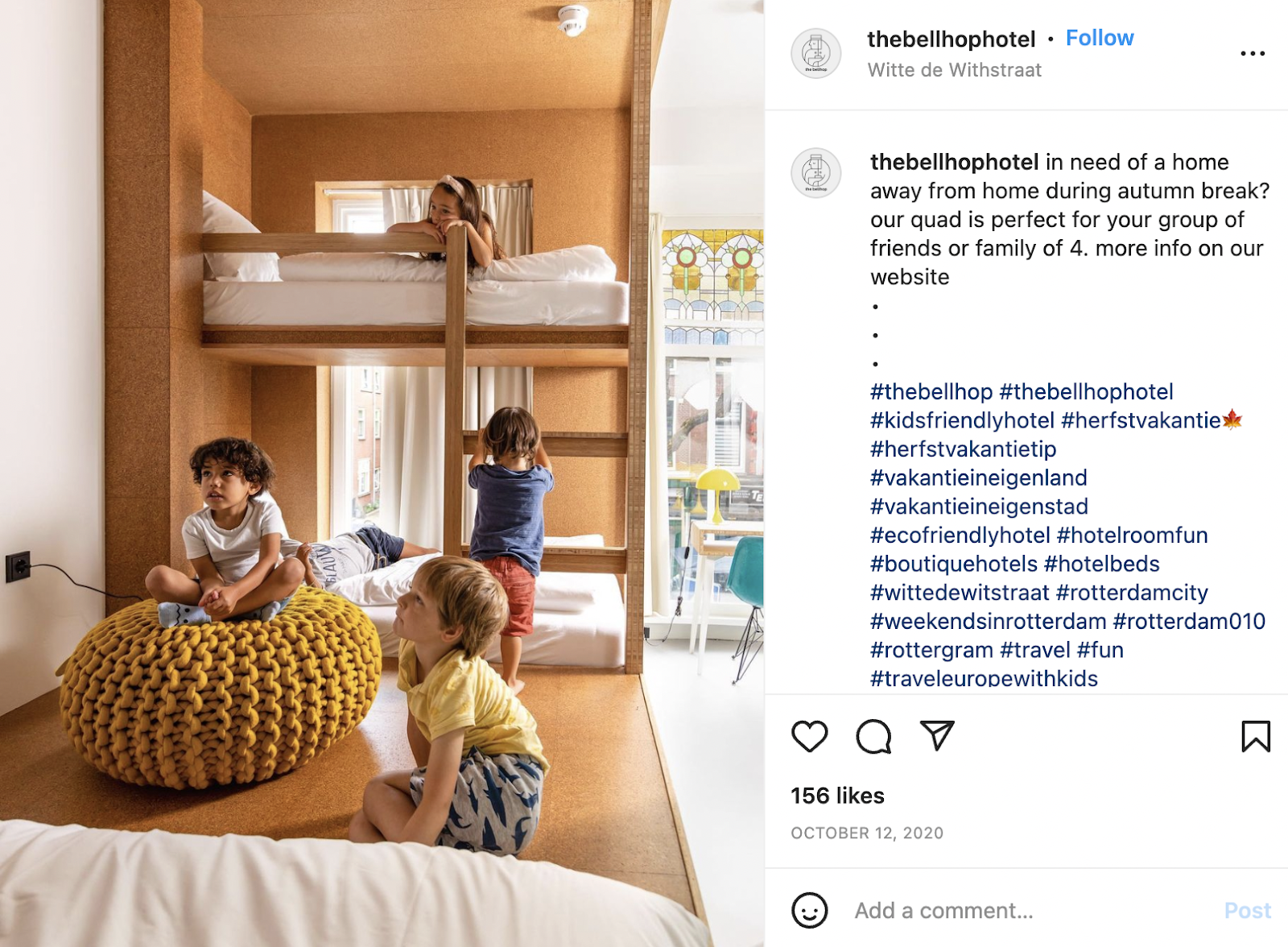
Unfortunately, I see our lodging partners fall short on this one all too often. Instead of highlighting an awesome customer experience, they’ll revert to a photo of the hotel facade or a room with a really, really well-made bed.
But there are lots of fun ways to highlight experiential value in a candid and impromptu photo that are unrelated to the hotel’s sign or pretty room and to instead focus on real value to visitors. A good night’s rest, for example. Or including the room as a part of the fun of the trip.
Because these kinds of experiences happen organically in your business, the only missing element is having a phone photographer at the ready.
Admittedly, that’s a little weird in a hotel room. But our lodging partners could comp a room night for a phone photographer on staff with the idea that they would capture some of their genuine experiences to add to your social media posts, online and DMO listings, digital ads, and other marketing channels.
And shops, galleries, and museums can easily use their phone photography skills to quickly grab a few shots of real people engaging with their products.
Align with the Visitor’s Lifestyle
Take a minute to think about how your product folds into your customer’s lifestyle. Is there crossover with some of your interests or those of one of your team members? This is low-hanging fruit for your photo library. Just send a team member off with your product and ask them to take phone photos while doing their thing.
These images, for example, are clearly targeting Central Oregon’s outdoor enthusiasts and coffee drinkers. The business just needed somebody to have the product and a phone on hand:
Spice Up Your Listing Photos
Yes, visitors are definitely using the images that you post on your web and DMO listings for more logistical insights. Knowing what the front of the hotel looks like, for example, can help me get into the parking lot before I accidentally get back on the freeway.
But many of your visitors are still researching a trip they’re planning to take two or three months down the road. Candid photos of your business in its real environment invite visitors to see what things are really like in your day-to-day. And updating your listings photos to be seasonally relevant will help set expectations about what visitors can expect when they’re actually in your market.
Good Lighting Makes for Good Food Shots
Finally, a quick note about food shots: there are a lot of brown hues in food. And that just makes it look, bleh. If you’re phone photographing food, make sure you’re in a good, naturally lit area for a bright and warm tone and make sure there’s enough color on the plate to avoid an overly brown experience.
Phone photography opens many new opportunities to easily and cheaply capture images of not only your product but of the experience you want to promise to inbound and in-market visitors. Hopefully, these tips will help inspire you and your team to start thinking about how you can level up your photography to be more compelling and more engaging to your visitor customer audience and start seeing increases in social media engagement, digital ad clicks, and online conversions.
As we hurtle towards what industry experts believe will be the tremendousreturn of summertourism, many of our small- and medium-sized tourism businesses are returning to their steadfast pre-pandemic digital advertising and visitor marketing strategies.
But wait! If these are old strategies, are they still the best solution? Or is this a good time to take a fresh look at your metrics and optimize your visitor marketing strategy in preparation for the summer?
Check out this list of our top-six must-watch marketing metrics for tourism businesses this summer. If you’re not already looking at this data, I’d wager these insights will help you bring your strategies up to speed and running lean before the sunburn sets in.
Click-through Rate
Your click-through rate (CTR) is the total clicks on your digital ads divided by the total number of times your ad delivered on a web page. If your ad delivered 15,000 impressions and 300 people clicked on it, you have a 300/15,000 = 2% CTR. (Note: while a 2% CTR may seem pretty lousy, it’s actually quite good. By comparison, and dependingwhoyouask, old-fashioned digital display banners typically deliver a fraction of one percent CTR.)
Several factors may impact CTR, but one of the most notable is ad message relevancy — meaning, is your message relevant to the needs and interests of the visitor audience?
Content that is more relevant to the visitor’s interests will see more clicks. Voila, a higher CTR. Conversely, if your CTR is running a little low, consider the possibility that visitors can’t quite relate to your message, and that’s why they’re not clicking on your ad. It’s time to change it up.
If this has got you thinking about highlighting promo codes and price breaks in your content, you’re headed down the wrong road. The visitor is looking for ideas, inspiration, and help planning a destination experience. Updating your creative to highlight an experiential promise to the visitor will go a long way in increasing clicks on your ads and new customer leads. Consider things like the emotional benefit of family memories or a romantic getaway or the planning utility of your store’s proximity to nearby attractions as a functional benefit.
Aligning your business offerings with a visitor’s need will generate clicks and customers. And it’s all reflected in your CTR.
Time on Site & Bounce Rate
If you’re not totally familiar with these metrics, that’s okay and maybe par for the course with our smaller tourism business partners. But it’s definitely something you should ask your web team about.
Time on site (now called session duration) is a Google Analytics metric that reports the average time a user spends perusing your website content, reported in a number of minutes. Bounce rate is the percentage of users who enter your website but never go to a second page.
Together, these metrics indicate a good (or not so much) marriage between what the users expected to find on the site after clicking on an ad and what was actually there. If, after starting a campaign, you see a lift in your time spent on site and a drop in your bounce rate, your users are finding enough value in your ad content to click on it and then hanging out longer on your website. This is a very good indicator that your ad creative is well aligned with the visitor’s interests and that your website content is properly tooled to retain their interest and move them closer to purchase.
On the other hand, an increased bounce rate and a shorter time on site may indicate a serious mismatch between the value commitment in your ads and what the visitor found on your website. And potentially a missed opportunity to create new customers.
Both of these metrics are comparative benchmarks that can be impacted by any number of things on your site. Meaning, there’s not necessarily a “good” or “bad”. But there is “better” or “worse.” If you have questions about these, I recommend asking your web team.
Micro Conversions
“At the end of the day,” you may be thinking, “I just want to know if they bought something.” But hold on a sec. Marketing is about creating relationships as much as making the sale.
A micro conversion is one of a variety of ways visitors can engage with you before they book or buy. This can be engaging with a social media post, signing up for your newsletter, adding something to their online shopping cart, or downloading your menu.
Setting up micro conversion points on your end takes a bit of planning. But knowing where visitors are engaging with your business (or not) will likely reveal insights that can help guide your visitor marketing efforts.
For example, are people sharing your social posts? Is your session duration higher or lower? How much opportunity is sitting in abandoned shopping carts?
Consider what micro conversion points you have in your customer’s experience with your business and start thinking about ways to drive visitors to those points so you can start capturing data insights and updating your strategy to move those customers across the finish line.
Customer Sentiment & Willingness to Recommend
So the visitor customer buys something from you and leaves? What next? Well, they take to social media and customer review sites and start talking about you! To friends. To strangers. And to other prospective customers who are in your market right now.
As visitors are continuously looking at this stuff while they’re in your market, I can’t overstate the importance of having at least a general idea of what’s going on here. These are real opportunities to drive new customers into your business today. More than that, both satisfied and dissatisfied customers are being very vocal about their experience with your business. And other visitors are listening.
But what does it look like? How many positive and negative reviews did you receive last week? To how many did you respond? Do these comments indicate a recurring issue that may be impacting return visits and that you need to address?
Getting a pulse on customer satisfaction — especially customer dissatisfaction — takes just a few minutes a week and can mean the difference between new, paying customers and a giant missed opportunity.
The good news is these metrics are readily available to you and your team and easy to calculate. And remember that this is about high-level insights. Don’t get too caught up in putting this all into a fancy spreadsheet. A general understanding of how these things are trending will likely be enough to make meaningful changes to your visitor marketing strategies — and to your bottom line.
’re researching their trips and making decisions while they’re in your market. Then we can fine-tune your digital footprint to make sure your digital presence is working to bring new business in (and not pushing it away).
To that end, check out these five tips to update and optimize your digital footprint for summer visitors:
1. Update your listings for a great pre-customer experience
There’s nothing more frustrating to a could-be customer than looking online and confirming that a business is open only to drive there and discover they’re not.
Ensuring your business details are accurate across the web is critical in delivering a positive experience with your business before customers actually arrive. Take some time to make sure your business information is updated across these visitor marketing tools:
YOUR WEBSITE — Your website is a primary source of information to visitors because they’ll find your site from any number of other channels and because search engines will crawl your site for details and deliver your site to visitors based on content relevancy. Take some time to update your website content to highlight summer offerings and remove outdated content to create a meaningful, relevant, and unconfusing experience for your could-be customers.
YOUR GOOGLE LISTING — Google’s at-a-glance information about your business as part of a Google search result is a key resource for visitors who are in your market and on their phones looking for businesses like yours. Ensuring that your Google Business details are current will help drive these ready-to-spend customers in your direction.
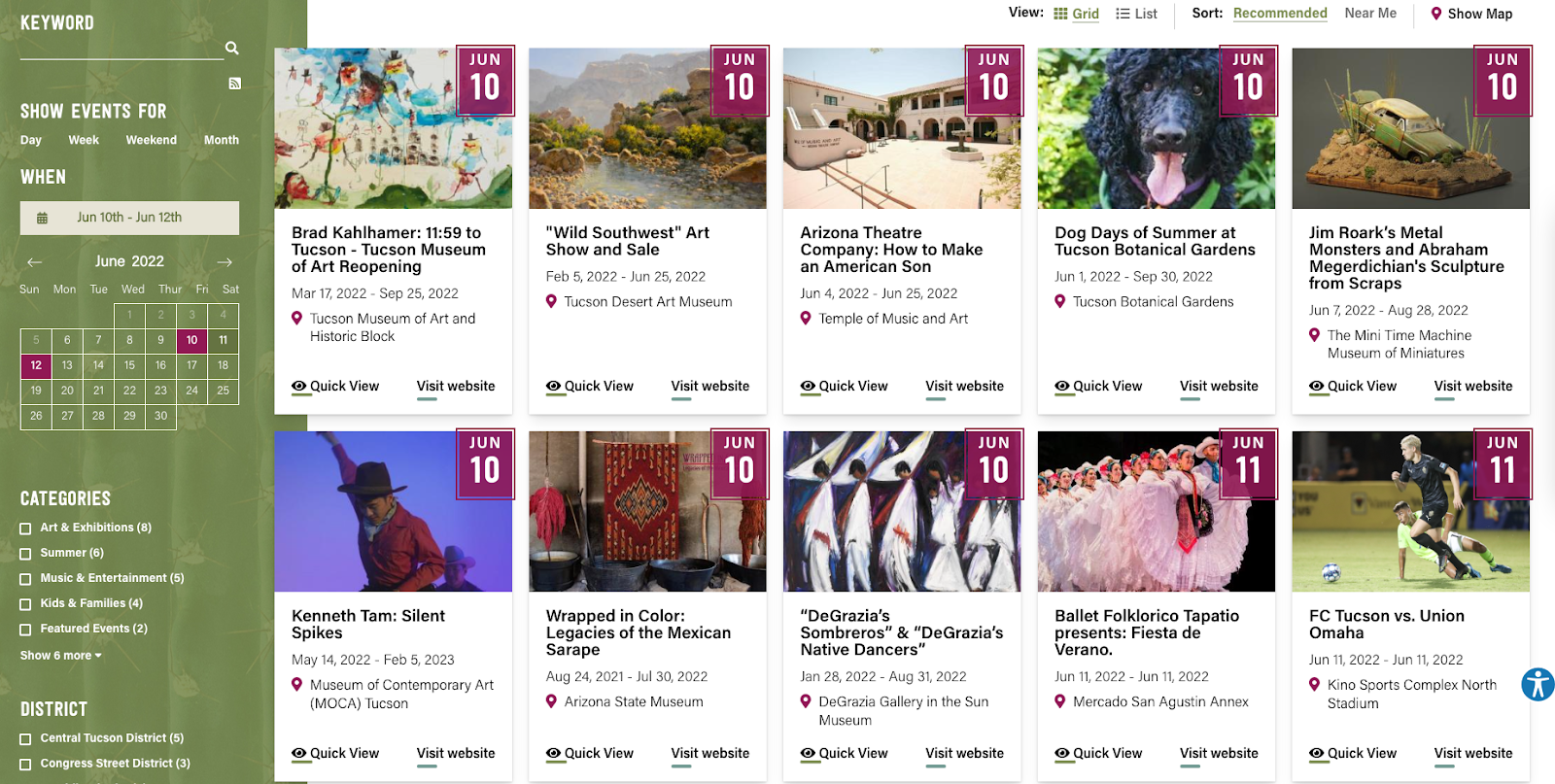
LISTINGS ON YOUR DMO, CVB, or CHAMBER WEBSITE — Your tourism organization is putting a great deal of effort into marketing your destination, and their website likely ranks highly in search as a result. This means there are more visitor eyeballs on listings and events running on their website, so definitely connect with your destination marketing organization (DMO) contact for details about your options to highlight your business, events, and other listings on their website.
CUSTOMER REVIEW SITES & SOCIAL MEDIA — In these cases, your fans have already done much of the heavy lifting in promoting your business. You just need to clear the way so new customers can find you. Take a minute to make sure your business details on all of these platforms are up-to-date to help them take the summer visitor take the next step.
2. Promote your summer events broadly
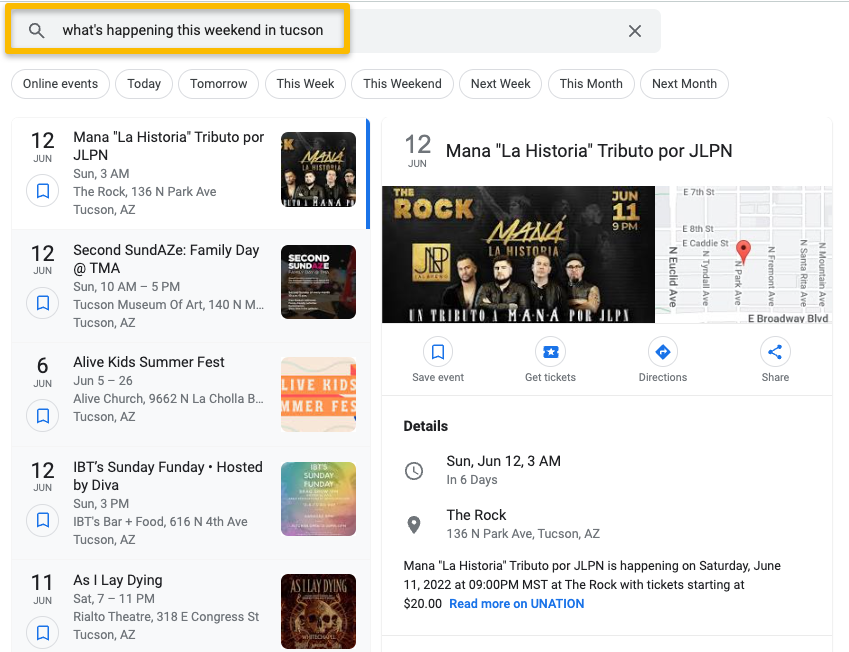
Not only on your site, but in your Google Business account, your DMO’s site, on social media, and even in your weekly paper and quarterly print publications. But remember that if plans change, somebody on your team needs to update event details across these channels.
3. Manage your customer reviews regularly
Yes, these are customer reviews, but you absolutely have a voice here and an opportunity to help guide the conversation to help make your business shine.
Respond quickly to new reviews, like within a day or two. The response could be a simple, “Thanks! I’m glad you liked it!” or something more heartfelt. Any reply will make the reviewer feel heard and help create warm and fuzzy feelings about your business.
And could-be customers are looking at how you’re interacting with your reviewers (or not) as a customer service indicator. To that end, you should reply to negative remarks, too. Ignoring an upset customer could set expectations for a negative service experience.
4. Make sure your web content is searchable
It’s easy to add a JPEG or PDF of your menu or event flier to your website and call it done. But since search engines cannot crawl content embedded in an image, this is likely a missed opportunity to help your website rank more highly in search results. Take some time to convert any non-HTML content on your site to a web page that can be crawled by search engine bots.
5. Use long-tail search keywords to drive content
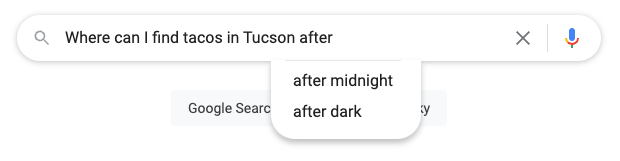
Long-tail keywords are search questions expressed in a way that a human would ask and include details that narrow the search results to meet specific user needs. For example, “Where can I find tacos in Tucson after midnight?” is about finding a solution for a specific and immediate need: I’m out late, and I’m hungry.
Take a few minutes to think about some of the specific visitor needs your business helps to satisfy. You can lean on Google’s autofill to help provide insights about what people are already searching — just start typing your question and see what pops up.
Expand this to 10 or 12 other long-tail search questions your customers may be asking. And then update your site content, listing content, and social media posts accordingly to get your business ranking high on the results for these specific search questions.
Accurate and relevant content on the web is imperative to deliver a positive customer service experience online and to drive new visitor customers through your front door. If you haven’t already optimized your business details for summer visitors, this is the time.
But also remember that somebody on your team will need to stay on top of this and make changes quickly. Once you have this in place on your team, keeping your digital footprint optimized takes just a few minutes a week. And soon, you’ll see more of those could-be visitor customers turning into actual customers and loyal fans.
Boy, oh boy, late July in the Pacific Northwest was a scorcher. Temps in the western parts of Oregon inched past 100° and prompted us to consider that a trip to the Canterbury Renaissance Faire in Silverton was maaaybe not such a great idea. Alas, it was the last weekend of the event. And we’re still riding our post-pandemic summer road trip journey. And it’s going to be hot here in Central Oregon anyway. Sooo …
We loaded up the camper and headed west. And, man, it was hot. Not hot enough to dissuade us from continuing the trip, but definitely hot enough to make us think about our own visitor needs and what Salem-area small businesses would need to do to get us to spend with them. After three sweaty and tiring days, I came to realize how the incredible heat created some extreme situations that really highlighted how managing our customer’s experience is so critical in visitor marketing strategies.
To that end, check out these four critical visitor experience insights highlighted during our road trip in the Pacific Northwest’s extreme heat:
1. Empathy goes a long way for customer satisfaction
When it’s this hot (in a market with average summer highs in the low 80s) everybody’s helping everybody else as much as they can. Kitchens have turned off ovens and grills for the sake of their staff. Customers are embracing (and likely prefer) “cold” menus. And businesses are handing out bottles of water freely.
Because we’re all pushing through the heat together, it’s easy for us to be understanding of one another’s situations. And, if we’re being honest, likely more understanding than we’d be on a cooler, “normal” day when your customers and team members are dealing with all sorts of different things.
If our teams are embracing in our everyday work the kind of empathy we saw from Salem-area businesses in the heat, customer satisfaction will run high. And these customer experiences will absolutely manifest into positive online reviews, customer recommendations, and return visits. For the sake of customer experience, just … give people a break.
2. Inaccurate information on the web will tick people off
There’s no better way to sour a customer experience than by highlighting your brewery’s menu online only for me to find — after I’ve driven there and unloaded my family — that you’re not serving any food. I understand why you’ve closed your kitchen because of the heat. I just wish you’d have told me before I got there.
And, yeah, you totally could have. Updating your listings across the web to highlight changes in your store hours, menu options, and other restrictions is critical to delivering a positive experience for your customers before they set foot in your business. If you’re changing any of these things — or if you’re not even serving any food today, for crying out loud — update your Google listing to make sure that’s clear. Not updating this content is just asking for a poor customer experience.
3. Good or bad, you can bet I’m going to share my experience
What can I say? I’m a sharer. When I post my review to Google, Google praises me for it, tells me that other people are finding it helpful, and encourages me to offer more reviews. More than that, prospective customers will read it. In fact, consumers trust feedback posted on customer review sites by strangers as much as if their friends or family said it.
Do you think I posted a negative review about the brewery that wasn’t serving food? You bet I did. And an hour later, I posted a positive review about the brewery down the street that was serving a (delicious) cold menu and provided excellent service.
These are legitimate, unfiltered, and unsolicited snippets of feedback about the experiences your team is providing to your customers. Reviewing your customer’s reviews will give incredible insight into your customer’s sentiment and willingness to recommend. And it may even shed some light on things you can do operationally to help improve your customer’s experience.
4. Knowing how your customer’s needs change seasonally will drive in new business
After the big miss with the brewery with a menu that wasn’t serving food, we started vetting our ideas by calling prospective places to eat before we drove there. Given our realization that few buildings in Salem are equipped with central air conditioning, this became a big qualifier.
Sure enough, a brewery down the street did not disappoint and confirmed that they had (a relatively small) air conditioning unit. And food.
This highlights potential opportunities to make sure the things you’re offering to your customers are relevant to their changing needs. If customers are looking for air conditioning in 100° heat and you’re one of a few places offering it, you should definitely promote that.
But, more generally, it’s important to know how your value offering shifts as the seasons (and the needs and desires of your customers) change so you can effectively promote your business to satisfy these needs. After all, if we visit again in the winter, we may be looking for patio dining and a fire.
By the time you’re reading this, the heat has subsided in the Pacific Northwest, and we’re all falling back into happy complacency. But, for me, our experience as visitors in this extreme heat has highlighted some very important ways to help manage customer experience. If you keep these ideas at the front of your visitor marketing strategy, you’ll be well positioned to attract and convert visitors in your marketing into paying and returning customers and advocates.
And if you’re feeling sympathy for us for enduring the heat, remember that there were people dressed in full armor and fighting with swords at the Ren Faire. Yikes.
For my family, this was THE SUMMER OF THE ROAD TRIP. Finally emerging from our pandemic shells in March, we embarked on five road trip adventures over a few short summer months, including a long haul from Central Oregon down to Tucson and several trips to the Oregon and California coasts.
While this was, of course, much about making up for time lost over the last few years, I can’t help but also look at this through the lens of a marketer in the tourism industry. As mentioned in a previous blog post, I’m keenly curious about what drives road-trippers to the road and what keeps them going back. And I think I discovered what might be an unsung hero in the road-tripping experience of small-town America: public art.
Finding Americana
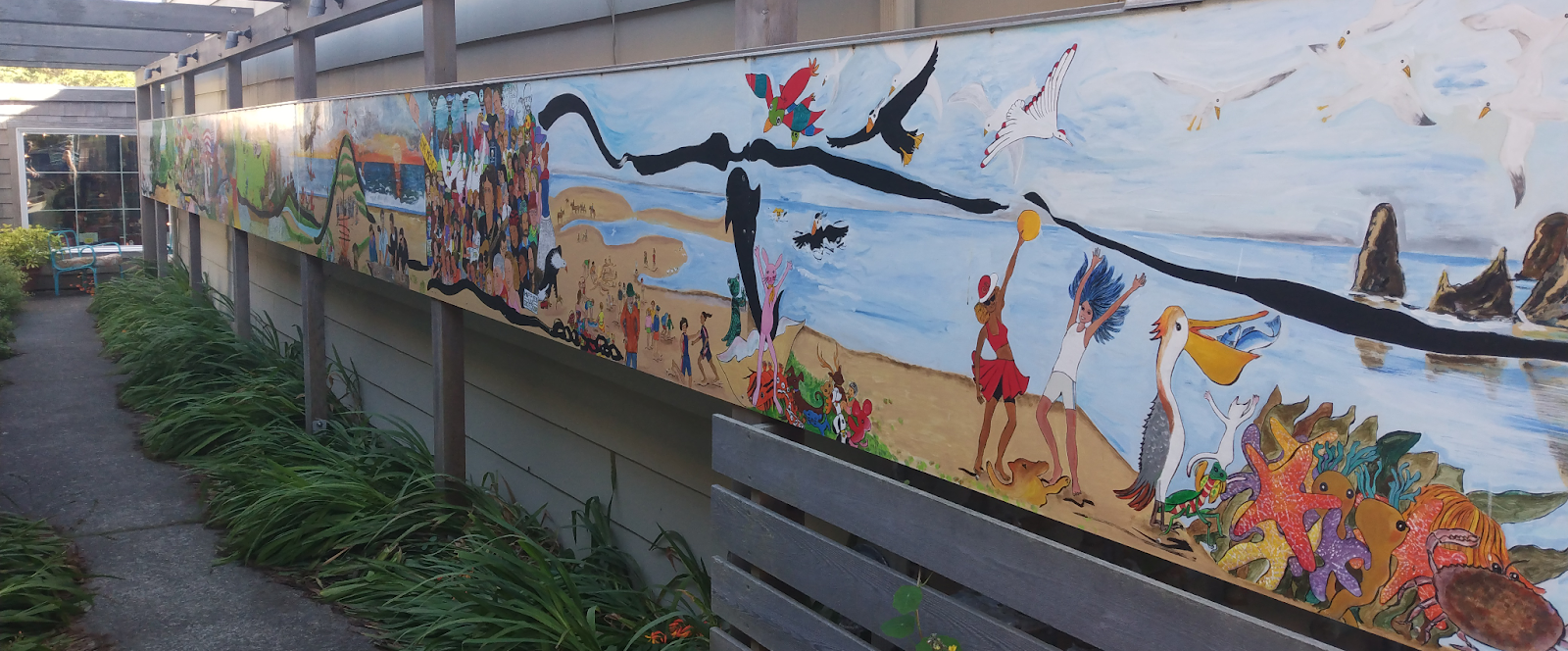
My family and I are drawn to quaint downtowns that are home to cute local eateries, unique little shops, and leisurely strolls. Because our hometown is filled with very cool murals and sculptures, looking at public art is already a part of our routine. It should be no surprise, I guess, that “finding art” would work its way into our road-tripping to-do list.
Admittedly, it’s probably a bit out of the norm to head out on a 90-minute urban hike with my eight-year-old in the downtown area of Cannon Beach, Oregon hunting for murals, sculptures, and not-so-obvious architectural flourishes. For most visitors, public art likely serves more as a background element — it’s seen, but do they know what they saw? Whatever it was, it was pretty.
For others, though, it’s a delightful distraction from whatever they were doing. And we witnessed more than one group stop and backtrack to admire works they nearly passed by.
But some of our favorite pieces in Cannon Beach were tucked away off the main drag, down corridors and alleyways, and in neighboring parks. And we delighted in the idea that we were likely some of the few people in town at the moment who knew these things existed.
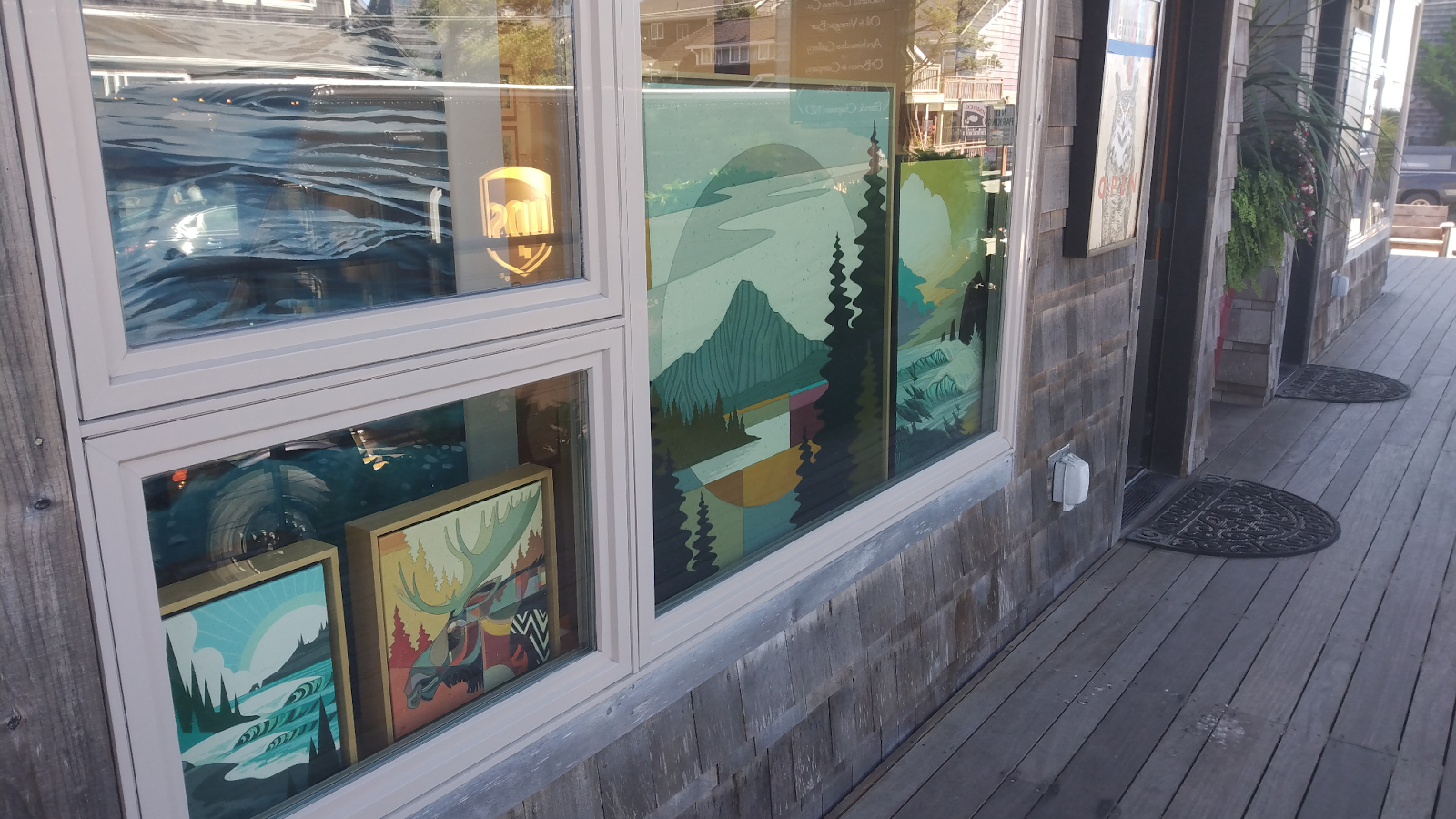
Local galleries obviously play a huge role in the visitor’s art experience with crowded window displays that create a fleeting but immersive experience in local works and (if we venture into the gallery) some narrative about the artists for extra context. Boy, was my daughter elated when we stumbled into a Cannon Beach gallery featuring the works of a PNW artist whose work is already hanging in her bedroom!
Our road-trip adventures are specifically designed with little detail and no real itinerary — pick the destination and head towards adventure. At the very least, our public art installations create a beautiful in-market experience and likely educate visitors about the community’s history and culture. For my family, public art creates a meaningful, deeper connection with the area and makes us excited to return.
It’s November, ‘tis the season for budgeting! Before you nail down your 2023 marketing and advertising spend, how much have you focused on customer engagement?
Your customer’s journey starts well before they see your advertisement or visit your site, just as it continues well after they book or buy. So let’s not lock in our budget quite yet. First, we need to broaden our view to find and capitalize on those opportunities to engage with the customer well before they come into your business and well after they’ve left.
Then, with a renewed focus on customer engagement, we can plan our 2023 marketing budgets in a way that will convert more new customers and nurture customer loyalty and advocacy for the long term. Where to start? Well …
Start Where Your Customers Are Starting
If I’m looking for a quaint B&B for a holiday visit in Tucson, for example, I’ll likely start months in advance with a search for a local hotel. While in Tucson, I’d look for “coffee near me” on my phone maps app and run a web search for “brewery with a restaurant,” where I take a moment to peruse the customer reviews for menu recommendations. As a B&B, coffee shop, or brewery, you’ll want to make sure your business is showing up in my searches — and on my timeline — to make my buying decisions easy. Here are five tips to help:
TIP #1. Earmark budget to empower your team to meet your customers where they’re looking for businesses like yours online.
Ensure your Google Business listing is up-to-date with your store hours, seasonal menus or products, events, and photos.
Monitor customer reviews on Google, Facebook, Yelp!, and other review channels and respond promptly and professionally to both positive and (very importantly) negative reviews.
Post regularly to social media with timely, seasonally relevant content.
This is easy and relatively low-cost, but you’ll want to dedicate your time to this or delegate it to a team member to make sure you’re tackling it with a regular cadence.
Be Available & Listen
Your customer will often have questions about your business that they can’t readily find in this early research and they’ll need a way to connect with you for answers, even if you’re not open at the time.
For example, I’ll need to know if the brewery can accommodate a group of 15 adults and seven kids, if minors are even allowed in the brewery, and if I can make a reservation or otherwise help the team at the brewery plan ahead. If I’m coordinating lunch plans and you’re not answering the phone until 11 a.m., you’re making it difficult for me to bring my business to you.
TIP #2. Allocate the budget to develop content that answers the customer’s clarifying questions.
Think about dedicated landing pages to address specific situations (such as large groups). Consider phrasing your page titles and headlines as questions that customers would enter into a web search to rank highly on search results.
Post information about common situations like group dining, reservations, specials or sales, and upcoming events on your listings across the web, including Google, Facebook, Yelp!, and your CVB or Chamber partner’s site.
Make an extra effort to be able to answer questions in the off-hours with a detailed message on your voicemail.
Make sure you have a search option on your website to help customers find answers.
Add an AI chatbot on your website to provide real answers in a conversational tone based on the customer’s questions and to escalate the question for you to address if needed.
Make Your Website Work For You
If your website sits relatively idle with most of your online efforts sunk into social media posts, you’re likely missing out on a big opportunity. With a strong focus on content related to the customer’s experience, your website has the potential to help drive a ton of new business your way.
This means planning an editorial calendar and crafting content focused on the customer’s needs. For example, a landing page on the brewery’s website about large groups might highlight the size of groups they can accommodate, guidelines about minors in the restaurant, and information about what kind of notice the brewery team needs in order to prepare.
This kind of content will also help you rank higher in search. If I searched, for example, “brewery, lunch for large group,” and if a brewery’s website content included verbiage about accommodating large groups, there’s a good chance your site will show at the top of my search results. If you compound this with a dozen other blog posts or pages that address questions customers are asking in their web searches, you’re well on your way to driving a ton of new business in your direction.
TIP #3. Upgrade (if needed) to a website solution and content strategy that will help you rank high on long-tail keyword searches.
Update your website to one that includes a focus on content and customer engagement.
Invest in SEO services to identify which keywords your customers are using to search for your business and other businesses like yours.
Dedicate time and budget to craft and post meaningful content on your website and social channels that address your customer’s core concerns.
Pay attention to your customer reviews.
Customers are going to tell their friends and family — and total strangers via customer review sites — about their experiences with your business and your team. And these insights will absolutely influence the buying decisions of the prospective customers who are listening.
TIP #4. Dedicate time and budget to monitor and reply to customer feedback on the web.
Remember that prospective customers are reading these reviews for insights about your product and the quality of your service.
Respond graciously to positive reviews and address negative reviews quickly and politely.
Budget for changes to your strategy
It’s likely that your strategies are going to shift over the course of the year. Be nimble in your efforts and use data insights to help you pivot gracefully and help guide your budgeting moving forward. Especially if you’re just getting started in one of these areas, you’ll want to have the latitude to make changes to your strategies throughout the year.
TIP #5. Bank reserve budget to have at the ready in the event that you need to pivot your strategy or heavy up in one area or another.
How do you feel now? I imagine many of us are already doing some of these things in our day-to-day, but it’s likely that at least some of these very important customer engagement tactics have never filtered into our annual planning.
Now that you’ve allocated budget and committed some of your own time to tackle these things regularly and with strategic intent, it should be easier to execute them on an ongoing basis. And when you circle back in reflection at the end of 2023, I think you’ll be happy to see that by increasing customer engagement in the early research and post-purchase phases of the customer’s journey, you’ve helped to create a richer, more personal, and longer-lasting customer relationship. Your bottom line will thank you.